Wage forecast could put August rate cut back on the map
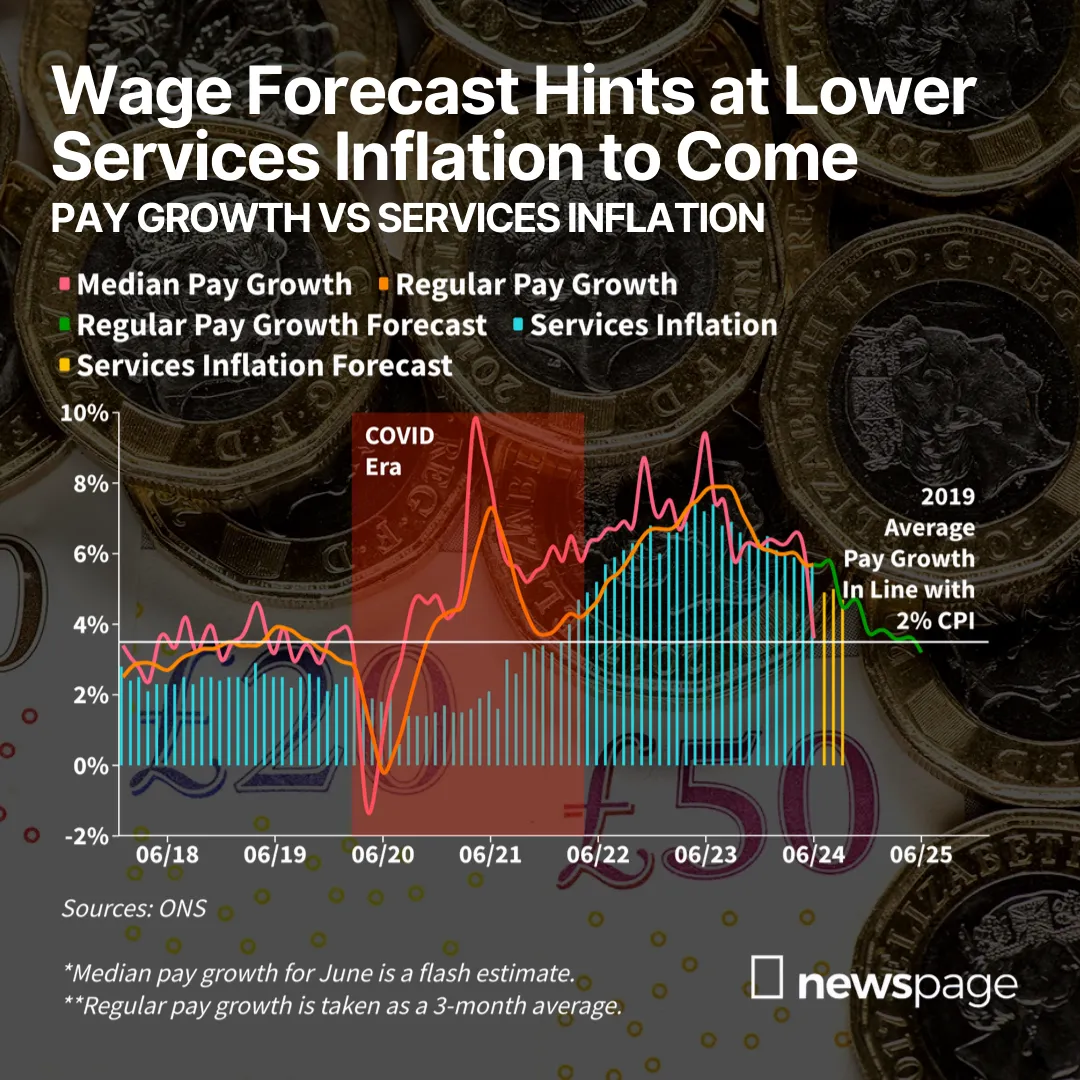
Research from Newspage found that historically, pay growth has been a reliable indicator for services inflation. Wage growth estimates for the months ahead suggest services inflation should cool again after a Taylor Swift-packed June. This could instigate a rate cut next week.
Last week's disappointing inflation data resulted in the odds of a rate cut in August getting dashed to less than 50%. While part, if not most, of the reason behind June's higher price rises came as a result of Taylor Swift's concerts, the higher rate of price increases last month may have been caused by a sudden surge in demand, rather than higher wages.
Wages are the main cost for most service providers, thus it's no surprise to see pay growth having such a strong correlation with services inflation. But while the media was occupied with the headline figure last Thursday, they seem to have missed the flash estimate for PAYE median pay growth (a leading indicator for average weekly earnings growth) in June, sinking to 3.6% from 6.0%.
Nonetheless, this stark drop is forecast to be a result of the much easier comparison to last June (pay growth is measured on a year-on-year basis). This was when the government offered one-off pay settlements to workers in the healthcare sector, which has one of the largest amounts of pay-rolled employees. This, therefore, spiked the pay growth rate.
Despite that, the month-on-month flash estimate also shows further encouragement. Median monthly pay is anticipated to have declined in June, to £2,382 from £2,392, marking the first contraction in median monthly pay in 6 months.
In addition to that, the latest Bank of England survey of CFOs found that expected wage growth fell another 0.3% to 4.2%, edging ever closer to the pre-pandemic average of 3.5%. This goes hand in hand with the data that CFOs are estimating their cost growth to continue falling further over the coming year, to 4.8%.
These drops are very much in line with the current forecast for average weekly earnings growth too. Therefore, provided these estimates are as spot on as they have been lately, wage growth should topple to levels that are consistent with steady 2% inflation by the end of the year. On that basis, even if a rate cut doesn't come in August, it should at the very least, come in September.
However, members of the Monetary Policy Committee will also be well aware of the new Labour government's plans to hike the minimum wage and ban zero-hour contracts. This will undoubtedly impact wage growth, as such policies tend to have a profound impact on the services sector, and might be why they've also been more cautious in getting the rate-cutting cycle under way.
Publishers: if you use any, or all, of the copy above or responses in this News Alert, please credit Newspage, e.g. "Speaking to the Newspage news agency, XXXX said...". For ease, all, or individual quotes, or all of the article, can be copied.