The lonely owner problem: People running small businesses are "exhausted, isolated, and terrified"
PEOPLE running small businesses are "exhausted, isolated, and terrified", they have revealed.
You can be surrounded by people and still be the one doing the 2am maths on payroll, clients, suppliers, tax, and the next “surprise cost” that lands in your inbox, they say.
And in this current climate, it can feel like it’s never just one thing – it’s everything, all at once, they add.
One UK survey found 47% of small business owners experienced poor mental health in the last 12 months, and 90% said the government isn’t doing enough to support their mental health.
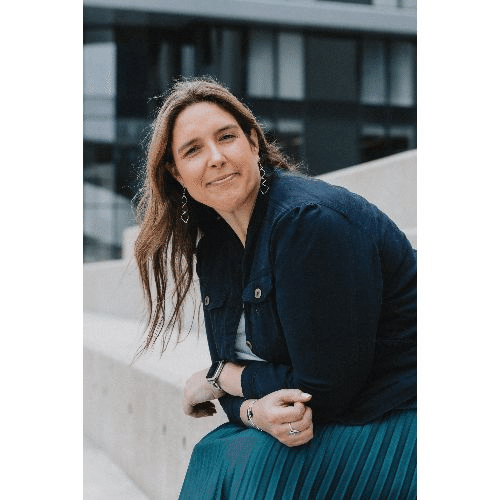
Kate Underwood, Founder at Southampton-based Kate Underwood HR and Training, said: "Your support circle isn’t a ‘nice to have’. It’s what stops you making expensive, lonely decisions at 2am. I’ve been building mine my whole career. And it changes depending on the stage you’re at.
"Early days? You need a fellow owner who gets the chaos, plus an accountant who’ll tell you the truth. Growth phase? Add a mentor who’s scaled before, and someone HR/legal-minded who’ll stop you winging people's decisions. Crisis mode? You need one calm, blunt human who can say, ‘Pause. This is panic, not strategy.’
“Loneliness isn’t a personality trait. It’s a business risk. Isolation makes you reactive, snappy and inconsistent. That’s when teams wobble, culture slips, and you stumble into avoidable employment law headaches. Write your circle down today. Three names. What each is for. Book the check-in now, not when you’re already on the edge.”
Colette Mason, Author & AI Consultant at London-based Clever Clogs AI, said AI can help.
She added: "Business owners aren't just asking consultants for AI copilots because they want to scale faster, they're asking because they're exhausted, isolated, and terrified to admit it to another human how tough things are and how desperate, muddled and despondent, they are becoming.
"The 2am payroll panic, the terse supplier email you're too tired to write, the mounting cost rises you can't bounce off anyone without looking weak or worrying them. This is where AI confidantes step in. Not for the sake of automation, but as a safe place to think out loud without judgement, without burdening your team, without risking your credibility.
“Why are business environments so hostile that owners would rather confide in a pattern-matching algorithm than risk appearing vulnerable to supportive humans. When 90% say govt support is failing them, AI becomes the consultant who doesn't need managing, the adviser who doesn't bill by the hour, and the confidante who won't think less of you panicking at 3am.”
Kate Allen, Owner at Kingsbridge-based Finest Stays, said she had to do everything in her business at the start of the journey.
She continued: "Running a small business is loneliest at the start. For years I ran every department because the business was too small to hire — finance, sales, operations, marketing — making constant decisions with no one to sense-check, often late at night, while juggling solo parenting alongside building the company.
"The mental load was relentless. Now the challenge has shifted. Managing a team brings different pressures, while political and sector-specific changes make planning difficult. The goalposts move continually, compliance increases, costs rise, and each year it feels harder to make a healthy profit, even when demand is strong.
“What’s made the biggest difference after 13 years is having a support circle; fellow agency owners to learn from and a trusted consultant to help with strategy, finances and decision-making. Looking back, affordable, practical advice or mentorship would have made all the difference.”
Colin Crooks MBE HonDsc, CEO at Intentionality, said he struggled when a previous business was in trouble..
He added: "When a previous business was on the brink of collapse, I finally got a mentor, and that's what saved it. Friends couldn't understand the problems, staff needed reassurance I didn't have, and clients couldn't be allowed to get even a sniff of imminent failure.
“Having someone outside the chaos who could help me separate genuine crises from noise made all the difference. Having a mentor is especially crucial now when new things seem to be hitting from every direction simultaneously.”
Craig Bunting, Co-founder at Derby-based BEAR, said he relies on two anchors to keep him grounded.
He continued: "Running a business can be isolating, not because you’re doing everything yourself, but because the responsibility ultimately sits with you. You’re stewarding people’s livelihoods, investors’ trust, and decisions that shape something bigger than you. What helps most is having a small, trusted circle.
"A co-founder, a leadership team you can be honest with, fellow founders who understand the weight, and advisers who can steady and challenge you. Isolation is where pressure does the most damage. For me, my wife, Lisa, and my faith are anchors.
“They give perspective in the quiet moments and help me carry responsibility with clarity. If one thing could change, it would be government recognising the risk founders take and the intangible value SMEs create. For hospitality, reducing VAT and fixing the damage caused by business rates would remove a huge, constant pressure. That’s what keeps founders in our sector awake at night."
Rachel Hayward, MD at Ask the Chameleon, said it is okay to ask for help.
She added: "I am the smallest of the small - a micro business of one, so the loneliness can be super loud. The hardest part? Not knowing what you need to know. I do reach out for help – I have a group of people who I trust implicitly. I am not an island, and it's okay to ask for help.
"I have a core group of 5 self employed and employed business buddies, an accountant who is excellent, and a business mentor who is also a bid writer. Invaluable. I am also a member of a 500-strong self employed online business group who are epic.
“Being solo can often mean your perspective is skewed – talking it out with a trusted friend can help you to explore all avenues. Support that actually is grounded in experience – someone who has the T-shirt."
Matthew Knight, Chief Freelance Officer at The Independency Co. said he can feel isolated.
He continued: "Running a small business can be incredibly isolating, and it has a major impact on one's mental health.
"This is something that cannot be ignored – and better pathways to support for new business owners is essential, for both their wellbeing and sustainability of the business too.
"Community plays a huge role here – there are amazing grassroots organisations supporting business owners and the self-employed – which deserve more funding, support and awareness around the amazing work they're doing to literally keep Britain's small businesses working."