Remortgage for home improvements: are more homeowners improving rather than moving?
By Gabriel McKeown, Head of Research, Newspage ·
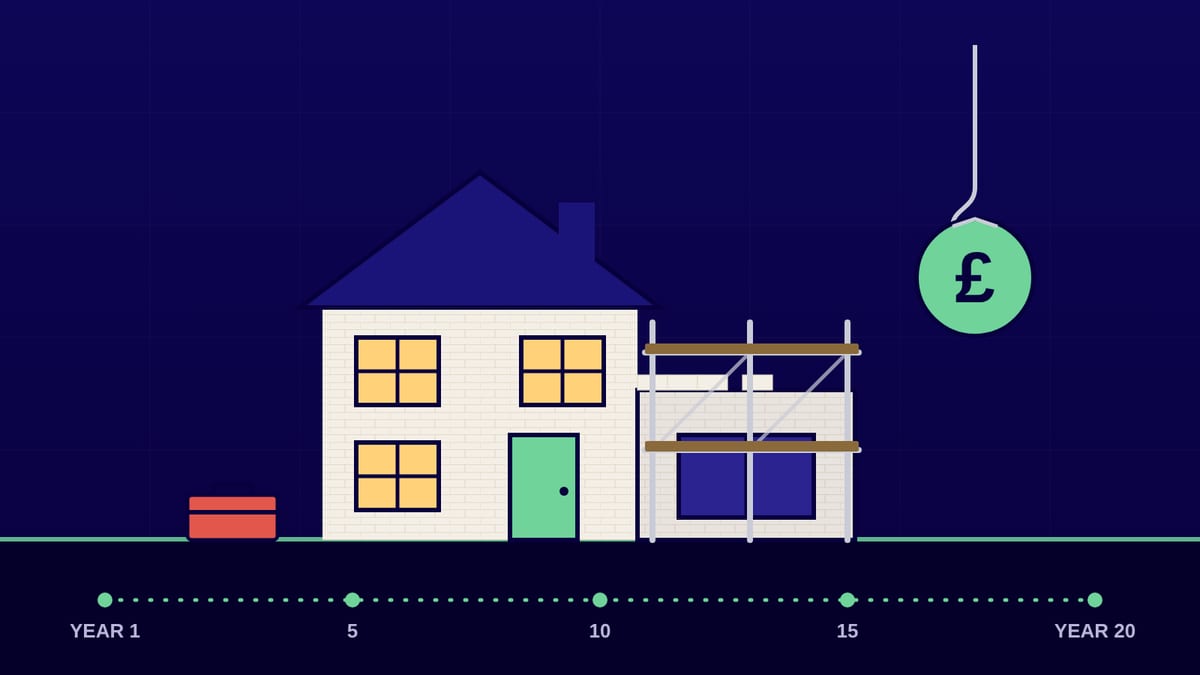
Should you remortgage for home improvements? It's a question a growing number of people are asking in the current climate.
Punitive stamp duty and moving costs are pushing more homeowners to improve rather than move in an uncertain market.
But remortgaging for home improvements is not money ‘on the house’. Mortgage brokers and advisers warn that borrowing £30,000 for renovations “could cost far more than £30,000”.
They say interest spread over decades "can quietly become part of the furniture" — much like that new kitchen.
Many homeowners are choosing to spend on the home they already have, from extensions and loft conversions to new kitchens and energy-saving work such as solar panels.
Moving home comes with stamp duty, which in England and Northern Ireland is charged at 2% on the portion of a purchase between £125,001 and £250,000, and 5% on the portion between £250,001 and £925,000, GOV.UK rates show.
That means a homeowner moving to a £400,000 home would pay £10,000 in stamp duty, before estate agent and solicitor fees are added. The more expensive the house, the more stamp duty you pay.
Remortgaging to release equity is one way to pay for the work, but brokers say a further advance, second charge mortgage or personal loan can work out cheaper, depending on the size of the project and the homeowner's existing deal.
They urged homeowners to compare every borrowing option on total cost rather than the monthly payment, to build in a contingency for overruns, and to treat any rise in the property's value as a bonus rather than a given.
Are more homeowners improving rather than moving?
The cost of moving rises sharply with the price of the home. Stamp duty on a £750,000 purchase comes to £27,500, almost three times the bill on a £400,000 home, based on the same GOV.UK rates.
Staying put also avoids estate agent, conveyancing and removal costs, leaving more of the budget for the building work itself.
Jamie Alexander, Mortgage Director at Romsey-based Alexander Southwell Mortgages, said his firm is seeing noticeably more homeowners improve rather than move than a year ago.
He added: "With moving costs high and the market slow, it makes sense for a lot of families. The work is a real mix, from extensions and loft conversions to kitchens and energy saving upgrades.
"How you borrow depends on the size of the borrowing and the rate you are on. If you are on a cheap fixed rate, a further advance can let you keep it and avoid early repayment charges.
"If your deal is ending soon anyway, a remortgage often makes the most sense. For smaller amounts over a short period, a personal loan can work out cheaper overall.
"The thing that catches people out is the term. Borrowing £30,000 over 20 years looks cheap monthly, but you pay far more interest than on a five-year loan. Always compare the total cost, not just the payment.
"Lenders will want to know what the money is for, and bigger projects may need planning permission and a valuation."
Riz Malik, Independent Financial Adviser at Southend-on-Sea-based R3 Wealth, said: "The more expensive the property, the greater the incentive to improve rather than move, primarily because of the sunk cost of stamp duty.
"Lenders are usually happy to fund improvements, probably because it will improve the value of the asset they have as security, and the process is pretty straightforward.
"For those who can't borrow more with their existing lender, there are also second-charge lenders who can potentially have better affordability models."
Should I remortgage for home improvements or take a further advance?
A remortgage replaces the existing mortgage with a new deal, often with a different lender, while a further advance adds extra borrowing with the current lender, usually on a separate rate, leaving the existing deal in place.
Switching before a fixed rate ends can trigger early repayment charges, which a further advance or a separate loan can avoid.
A second charge mortgage is a separate loan secured against the home alongside the main mortgage, while a personal loan is unsecured and typically runs over a much shorter term.
Second charge lending has grown quickly, with £2.4bn of new second charge mortgages agreed in the 12 months to August 2026, up 24% on the previous year, according to the Finance & Leasing Association.
Ranald Mitchell, Director at Norwich-based Charwin Mortgages, said: "Improving rather than moving can make sense, but the funding needs to fit the project.
"A full remortgage is only one option; further advances, flexible mortgages and second charge mortgages can all work better depending on the existing deal, early repayment charges and how the money will be used.
"Flexible drawdown second charges can be especially useful because funds are drawn as work progresses, so borrowers only pay interest on what they use while keeping extra capacity if costs rise.
"What catches people out most is overambition. Projects take longer, cost more and uncover problems nobody budgeted for. Too many homeowners finance the quote rather than the reality and fail to add a proper contingency.
"Lenders will look at affordability, property value, loan-to-value, existing borrowing and purpose of funds.
"Long-term borrowing can cost more overall, but if it creates the space a family needs for years, there is real lifestyle value, too."
Tracey Dixon, Buy-to-Let Mortgage Specialist & Owner at Cardiff-based Pure Mortgage and Protection, said homeowners do not want to "still be paying for the kitchen when it's ready to be replaced again".
She added: "Improving rather than moving can make sense, but the funding needs as much thought as the building work.
"Remortgaging could mean giving up a competitive existing rate or paying early repayment charges, so a further advance, second charge or personal loan should also be considered.
"A lower monthly payment can disguise a higher total cost when borrowing is stretched over decades.
"Compare fees, interest and the repayment term, build in a contingency for overruns, and don't assume every pound spent will add a pound to the property's value."
How much does it cost to borrow £30,000 for home improvements?
Adding the cost of home improvements to a mortgage usually brings a lower rate and a lower monthly payment, but spreading the debt over decades sharply increases the total interest paid.
Nouran Moustafa, Practice Principal & IFA at Roxton Wealth, said: "With moving costs, stamp duty and mortgage rates putting pressure on households, improving your existing home can look considerably more attractive than moving.
"But homeowners need to understand that borrowing £30,000 for renovations could cost far more than £30,000.
"At 5% over 20 years, £30,000 costs approximately £198 monthly, with around £17,500 in interest. At 8% over five years, repayments are roughly £608 monthly, but total interest is only around £6,500.
"Remortgaging isn't automatically the answer. Further advances, second charges and personal loans may offer better value, particularly where early repayment charges apply. Lenders will assess affordability, property value and the proposed works.
"My biggest concern is people confusing a lower monthly payment with cheaper borrowing. And remember, spending £50,000 on an extension doesn't guarantee your property will increase in value by £50,000.
“Improve your home for the right reasons, not simply because you can borrow against it.”
David Stirling, Independent Financial Adviser at Belfast-based Mint Wealth, said: "'Improve, don't move' is making a lot more sense to homeowners, particularly when the alternative involves stamp duty, solicitors, estate agents and discovering an entirely new set of neighbours.
"However, borrowing £30,000 at mortgage rates isn't automatically cheaper, and spread it over 20 or 25 years and the interest can quietly become part of the furniture.
"Before remortgaging, compare a further advance, second charge and personal loan on total cost, not just the monthly payment, and never assume a £40,000 extension magically adds £40,000 to the value of the house."
How do lenders assess a remortgage for home improvements?
Lenders typically look at affordability, the property's value, loan-to-value, existing borrowing and what the money will be used for, brokers said.
Loan-to-value is usually based on the home's current value rather than what it might be worth once the work is finished, and larger projects may need builder quotes, planning permission and a valuation.
Michelle Lawson, Director at Fareham-based Lawson Financial, said: "Many people make the wrong move here by relying on low or no interest debts to fund home improvements, which then falls into a debt consolidation case later down the line, so it can backfire. Often people underestimate the costs of works too.
"Some lenders want formal quotes to support any additional lending, and this very much also depends on how heavy the works are. There are many green initiatives to fund things like solar panels.
"There is no one size fits all for any home improvement scenario, but it does help to seek advice before starting so you can structure it properly and well."
Which home improvements add the most value?
A loft conversion or extension that adds a bedroom and a bathroom can add as much as 24% to the value of a three-bedroom, one-bathroom house, according to Nationwide research.
Kitchen and bathroom renovations were the most popular improvements among homeowners in the last five years, Nationwide found.
Stephen Perkins, Mortgage Broker and Managing Director at Norwich-based Yellow Brick Mortgages, said using mortgage borrowing for home improvements can make sense, “but homeowners should not assume the lowest interest rate means the lowest overall cost”.
He added: "Adding £30,000 to a mortgage over another 20 or 25 years may give a comfortable monthly payment, but you could be paying interest on that kitchen or extension long after it has been fitted.
"If the work makes the home better suited to your own needs and you will enjoy living there, that can be worthwhile regardless of what it adds to the eventual sale price.
"But if the objective is purely to increase the property's value, the sums need more thought because not every improvement adds back what it costs.
“The same applies to the borrowing: compare a remortgage, further advance and shorter-term loan on total cost, not just the headline rate."
Your questions answered
Questions answered by Ranald Mitchell, Director at Norwich-based Charwin Mortgages.
Is it a good idea to remortgage for home improvements?
It can be, and is a commonly used way to fund projects, especially for larger projects such as extensions, loft conversions, major renovations or any higher cost work. Using a mortgage for these will enable larger amounts of borrowing with a more controlled and affordable monthly payment. The key is to compare the total cost of remortgaging with alternatives such as a further advance, second charge or personal loan.
Should I remortgage or take out a loan for home improvements?
It depends on the amount you need, your current mortgage rate, early repayment charges and how quickly you plan to repay the borrowing. An unsecured loan may suit smaller, shorter-term projects, while secured borrowing can work better for larger costs spread over longer periods.
How much can I borrow when I remortgage for home improvements?
This depends on your income, affordability, property value, existing mortgage balance and loan-to-value. Lenders will also consider your credit profile and the purpose of the funds. The most important thing is to ensure that you do not over-commit to a payment that you cannot comfortably afford longer term.
Can I remortgage for home improvements while I’m still on a fixed rate?
Yes, but leaving a fixed mortgage early may trigger an early repayment charge. In some cases, a further advance or second charge can let you raise funds without disturbing your existing fixed rate. This way you get the best of both worlds, preserving a good mortgage rate, and releasing additional capital to fund your project.
Will home improvements add value to my home?
They can, but not every project adds more value than it costs. Extensions, extra bedrooms, loft conversions, garden makeovers, and well-planned renovations can improve value, but location, property type, build quality and local ceiling prices all matter. Replacing a kitchen with a kitchen, may add a little value but the costs would likely outweigh the property valuation gains. Lifestyle and quiet enjoyment of an improved property is also an important factor to be considered with any project.