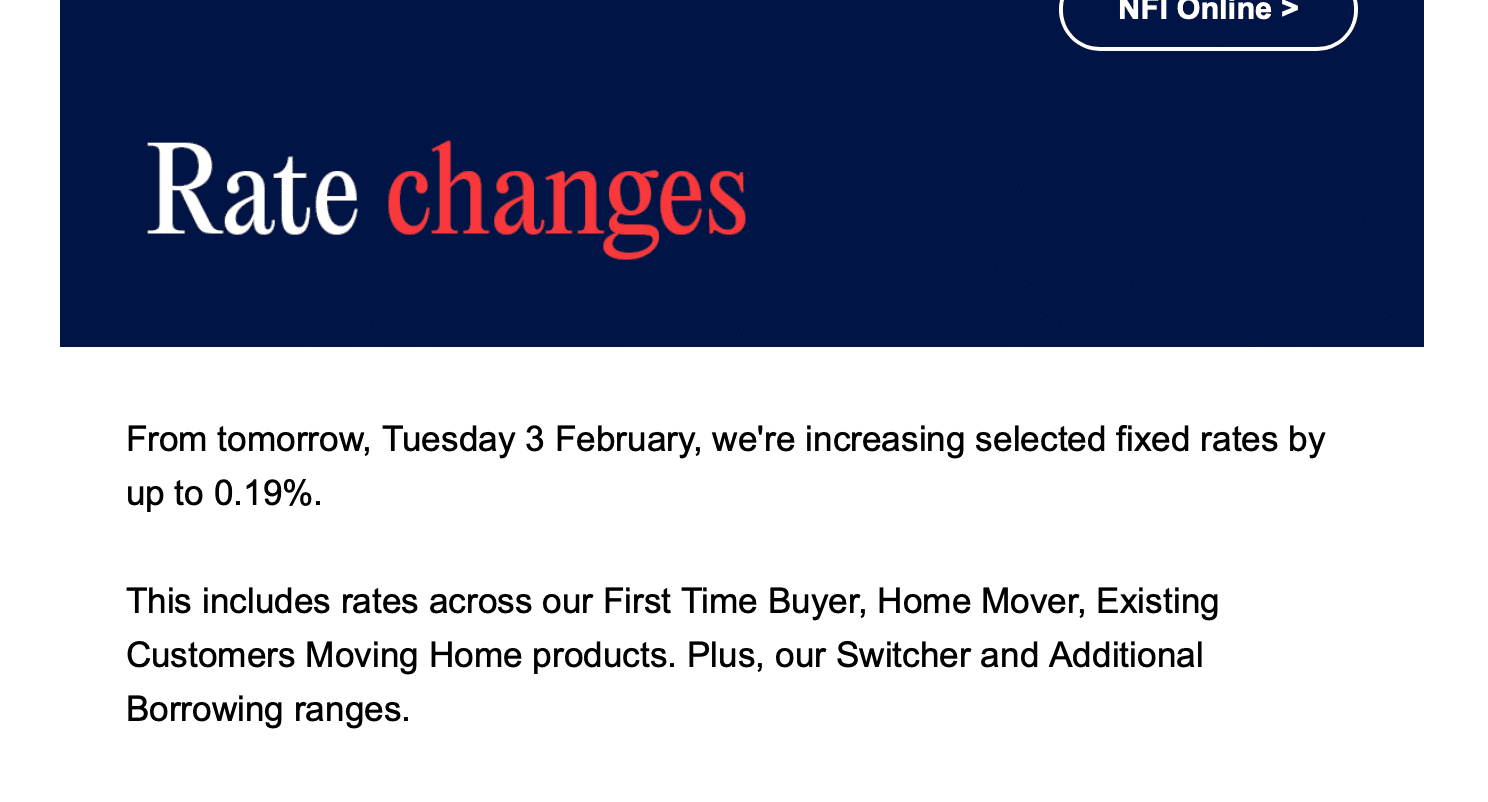
Nationwide, Virgin Money Increasing Rates up to 0.19%

ended 02. February 2026

Mortgage lenders continue to price against increasing Swap costs, with both Virgin and Nationwide repricing.
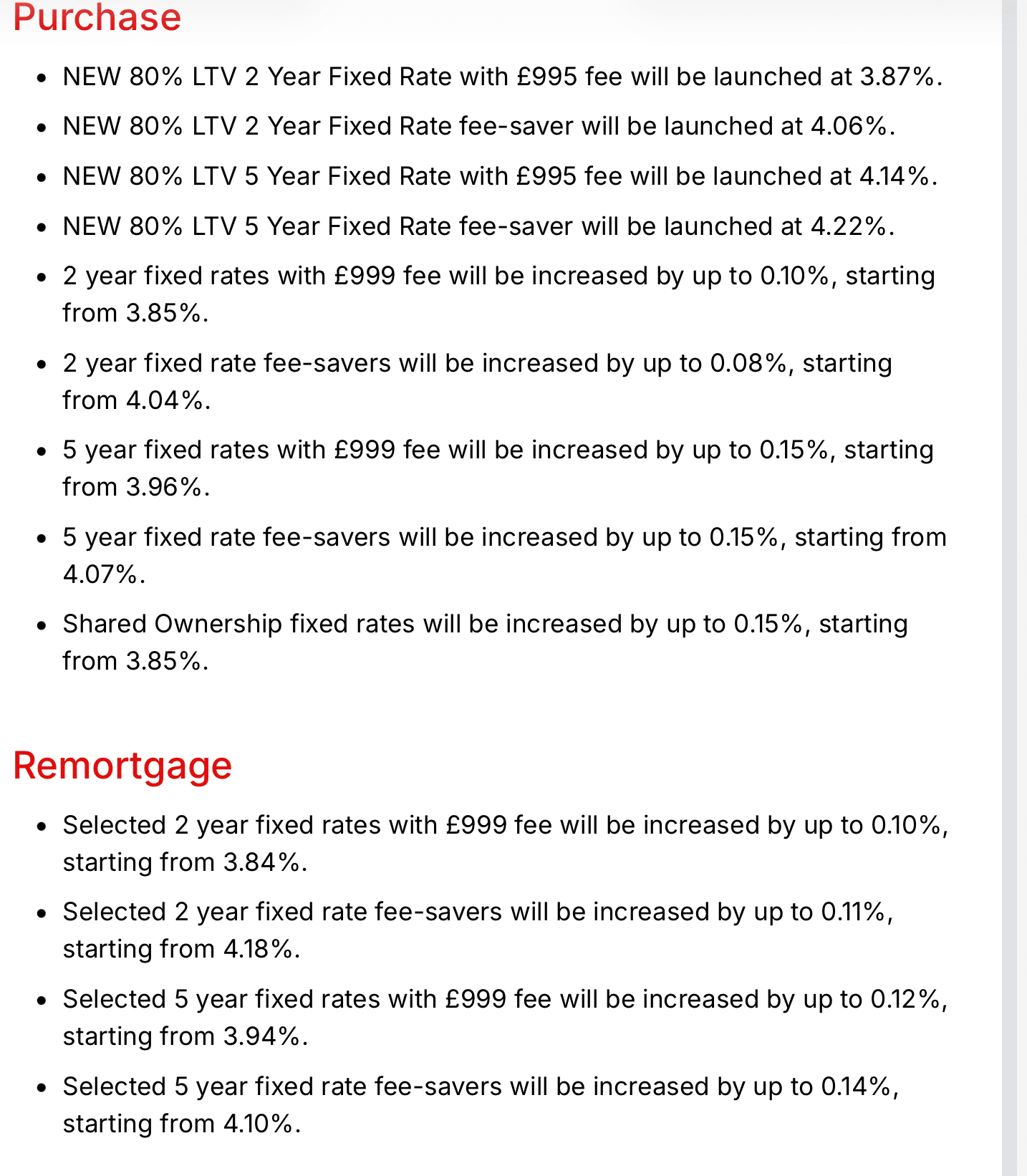
Not the best news to hit February with - is this just a little wobble or are we going to see more of this over the coming weeks?

Comments please

8 responses from the Newspage community

Copy all

Story Source
Copy

Pro
Justin MoyVerified
Managing Director at EHF Mortgages
iContact details are shown to logged-in members. Log in
After a good rally throughout January, the rise in Swap's has inevitably meant that lenders have had little option but to increase rates, this time up to 0.19% on selected deals. There are still some very good deals to take advantage of, but time is now pressing for existing borrowers to get their paperwork in and secure the cheapest deals.
Copy

Pro
Ben PerksVerified
Managing Director at Orchard Financial Advisers
iContact details are shown to logged-in members. Log in
This is a kick in the teeth for borrowers that have been full of optimism lately. We’ve seen swap rates edge up a little and now this is starting to impact the rates available to borrowers. Hopefully more positive news in the coming weeks if the BoE drop the base rate.
Copy

Pro
Katy EatentonVerified
Mortgage and Protection Specialist at Eatenton Finance
iContact details are shown to logged-in members. Log in
What these rate increases highlight is that the direction of mortgage pricing can change very quickly. With inflation edging up and the prospects of a rate cut by the Bank of England diminished, this is being priced into wholesale borrowing costs, and the result is higher rates for borrowers. This should serve as a shot across the bows to borrowers that rates can go up as quickly as they come down.
Copy

Pro
Jack TuttonVerified
Director at SJ Mortgages
iContact details are shown to logged-in members. Log in
Its no surprise that yet more lenders have moved to increase their rates following a sustained increase in the cost of borrowing to lenders, these are now higher than they were a month ago which is why we are seeing these increases. Whilst a cut in the Base Rate this week is unlikely, the split in the vote will be important to the financial markets and how they react to it.
Copy

Pro
Michelle LawsonVerified
Director at Lawson Financial
iContact details are shown to logged-in members. Log in
Will be interesting to see whether this is jostling or spooked markets. SONIA swaps are nudging down marginally but other markers such as Gilts are notching up. After the PM's chest puffing about his success in mortgage payments coming down, is another U-Turn calling- it definitely won't be an apology that's for sure!
Copy

Pro
Emma JonesVerified
Managing Director at Whenthebanksaysno.co.uk
iContact details are shown to logged-in members. Log in
It's now pretty clear that the road to lower rates may be longer and slightly bumpier than expected, as inflation has dug in its heels. Borrowers need to take note when a lender as large as the Nationwide increases rates by up to 0.19%
Copy

Platinum
Elliott CulleyVerified
Director at Switch Mortgage Finance
iContact details are shown to logged-in members. Log in
With inflation higher than predicted, it was inevitable that lenders would put the brakes on and increase rates as the SWAP rates rose as a result. The markets will continue to ebb and flow as the UK economic markt continues to develop. There will be hope this is just a blip and rates will continue trading downwards, but if inflation continue to defy predictions we may see further increases.
Copy

Plus
Darryl DhofferVerified
Founder at The Mortgage Geezer
iContact details are shown to logged-in members. Log in
Nationwide and Virgin Money are hiking rates, signaling an end to January’s "price war." The primary culprit is rising SONIA Swap rates—the price lenders pay for wholesale funding.
When swap rates rise, funding fixed mortgages becomes more expensive. Lenders must rapidly pull and reprice products to protect their profit margins and prevent service overload. This isn't a crash, but a correction: the market is realising the path to lower rates will be slower and bumpier than hoped.