Copy article

AI provides the wrong financial advice half of the time in "worrying trend", research shows

ended 15. October 2025

AI only gets half of financial advice correct and leaves Brits at risk of making damaging errors with money, new research shows.

Data by financial education specialists, Investing Insiders, asked AI tools 100 finance questions across a range of topics, including savings accounts, housing, and retirement, to examine how reliable they are at giving advice.

From the 100 questions, AI tools were correct 56 per cent of the time, deceptive or misleading for 27 per cent, and incorrect for 17 per cent, which means for 44 per cent of answers, AI isn’t helpful for Brits seeking financial advice.

AI answered 52 per cent of questions about investing and pensions incorrectly. In this section, 13 out of 25 answers were ruled as misleading or incorrect, with questions such as ‘How much should I save for a comfortable retirement?’ providing outdated facts and figures, as well as stating that the state pension is £185.15 per week, a figure which hasn’t been correct since April 2023.

Questions about tax bands also gave the wrong figures, and those about specific taxes, including ‘What is inheritance tax and how does it work?’, ignored vital information such as how gifts work and how you define a gift.

When it comes to major life events and purchases, such as buying a first home, an engagement ring, or a car, AI gave incorrect answers 70 per cent of the time.

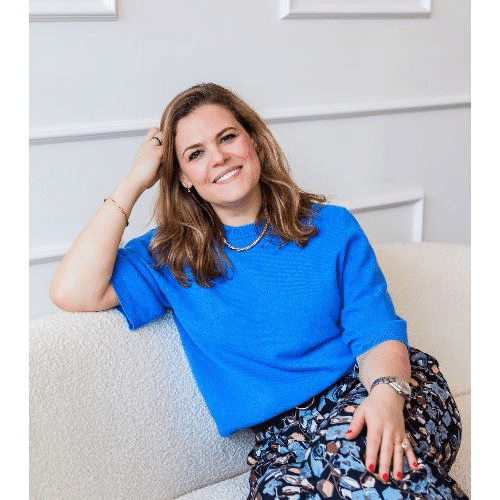
Antonia Medlicott, Founder and Managing Director at Investing Insiders, reacted to the findings: “Our study shows the worrying trend that AI isn’t providing sound financial advice when prompted. Even more concerning is that millions of Brits are doing this and being misled across a range of topics, from basic advice to savings accounts and large life events like buying a home or retirement."

Antonia also provided her advice to those asking finance questions to AI tools: “Our stance is simple, don’t take AI tools at face value; instead, be sure to consult with real experts, as they are less likely to make major mistakes that could leave you with even larger struggles.

“Asking a question to get some initial insight is fine, but it’s important to be safe and double-check any information. Looking for answers to a major, specific personal matter is where you are most likely to be led astray, which is where professionals are much more reliable. Ultimately, wrong decisions financially will have a significant impact on your life, and AI doesn’t know your circumstances.”

David Stirling, Independent Financial Adviser at Belfast-based Mint Wealth Ltd, said we need to use AI wisely.

He added: “The danger isn’t that AI will become too intelligent, but that we will rely on it too blindly, and end up making bad decisions. These statistics show that AI is far from flawless, but these systems take time to learn and will only improve over time so they are far from dead in the water. 

"In the argument of adviser versus machine, an adviser will look further into your background details and find a more nuanced solution based on your circumstances than the black and white responses from AI. In this fledgling era of AI, human judgement will continue to be the ultimate upgrade and AI responses should always be double-checked and verified.”

Ben Perks, Managing Director at Stourbridge-based Orchard Financial Advisers, went even harder on AI.

He continued: "AI seems to be MIA when it comes to good advice. A 40% success rate is shambolic and any human of that quality would be struck off by the FCA pretty quickly. 

“Financial advice relies heavily on personal interactions, care, understanding individuals and outside the box thinking, it’s a long way away from algorithms that spit out generic responses.”

AI experts rejected the suggestion that AI shouldn't be used for financial advice.

Mitali Deypurkaystha, Human-First AI Strategist & Author at Newcastle upon Tyne-based Impact Icon AI, said: "Let’s be blunt: these researchers don't realise their study doesn’t expose ‘AI giving bad advice’ – it exposes a UK-wide AI literacy gap. Some of what they call failure is user error. Ask AI today for the current UK state pension and you’ll likely get citations straight from gov.uk. 

"The other likely error is user knowledge on choosing best-fit AI tools. That’s the 'GP-vs-surgeon mistake.' You wouldn’t ask your GP to do open-heart surgery, don’t expect a general AI to be your personalised financial adviser. 

"There is no public, expert-level finance-advice AI for them to test. The real warning isn’t ‘don’t use AI’ – it’s ‘teach people to use it well.’ Give the UK accessible, national AI-literacy programmes now."

Colette Mason, Author & AI Solution Architect at London-based Clever Clogs AI, said it would be five years before AI could give bulletproof financial advice.
 

She added: “The idea that AI is failing because of dated scrapes is a distraction. That’s user error, not an AI limitation. Any serious user can correct the dated advice by uploading the latest tax advice and thresholds to their own trained assistant, and forcing focus on those documents. 

"However, the core issue here is that the reasoning power is still lacking, even if a user updates the facts and figures. Andrew Lo of MIT, who is actively building finance agents, states clearly that we are five years away from a bot that can be considered reliable for giving truly tailored advice once a client’s personal details are added. 

“That timeline is a brutal reality check for those hoping AI will prove to be an affordable advice tool. For now, and for many novice users, it could prove to be a very costly mistake.”


11 responses from the Newspage community

Copy all

Copy

This cuts right to the heart of how complicated finance is. AI can do some fantastic things and is learning all the time but it'll have its work cut out trying to tame our arcane finance rules. This means this unless that applies oh but if you did this 5 years ago something else applies, is really difficult for any sort of automation or algorithm. AI can help get you started on a topic and give you a framework but please do not rely on it for anything serious.
Copy

AI is a great tool, but it’s far from perfect. I’ve often found it can produce completely false answers to technical questions—yet deliver them with absolute confidence. Worse still, when challenged, it tends to brush off any criticism without anything resembling a genuine apology. Consequently, I would never rely on AI at this stage, preferring instead to use it as a way to confirm or challenge my existing knowledge. For those without that foundation, however, accepting financial advice from AI could easily lead to costly mistakes or even tax penalties.
Copy

We use AI every day from running financial models to assessing risk appetite for potential new ventures. The key difference is that we treat AI as a tool, not a source of truth. We provide it with accurate data to analyse, rather than relying on it to generate the facts. Using AI as the data source itself is inherently risky; it’s still learning. It’s a bit like asking a primary school student to do their best; it’s promising, but not yet ready to be trusted without supervision.
Copy

AI seems to be MIA when it comes to good advice. A 40% success rate is shambolic and any human of that quality would be struck off by the FCA pretty quickly. Financial Advice relies heavily on personal interactions, care, understanding individuals and outside the box thinking, it’s a long way away from algorithms that spit out generic responses.
Copy

The danger isn’t that AI will become too intelligent, but that we will rely on it too blindly, and end up making bad decisions. These statistics show that AI is far from flawless, but these systems take time to learn and will only improve over time so they are far from dead in the water. In the argument of adviser v machine, an adviser will look further into your background details and find a more nuanced solution based on your circumstances than the black and white responses from AI. In this fledgling era of AI, human judgement will contine to be the ultimate upgrade and AI responses should always be double-checked and verified.
Copy

AI doesn’t automatically ask the human questions that matter most. It doesn’t know your values, fears, or what money really represents to you. It assumes your goals are purely mathematical, when in reality, financial decisions are deeply emotional. I’ve seen people rely on it for inheritance tax or retirement planning, only to find it’s based on outdated data or false assumptions. At the moment the general public don’t know to train their own project with the correct data so it is partly user error too. One woman thought she’d need to work another 10 years because AI didn’t factor in her pension income. I think it will improve but for now it is risky to cut costs by avoiding an advisor.
Copy

I’m increasingly concerned by how many people are turning to AI for guidance on what is often the biggest financial commitment of their lives.

AI has its place — it can help people learn and explore the basics — but it should never be mistaken for tailored, regulated advice. There’s a growing overreliance on technology in areas where accuracy and accountability are critical, and a line must be drawn to better educate consumers on that distinction.

Mortgages and protection planning demand real understanding, regulation, and human judgement. Algorithms can’t assess complex personal circumstances or future goals. Qualified advisers exist for a reason — to ensure every recommendation is accurate, compliant, and in the client’s best interests.
Copy

Let’s be blunt: these researchers don't realise their study doesn’t expose ‘AI giving bad advice’ – it exposes a UK-wide AI literacy gap. Some of what they call failure is user error. Ask AI today for the current UK state pension and you’ll likely get citations straight from gov.uk. The other likely error is user knowledge on choosing best-fit AI tools. That’s the 'GP-vs-surgeon mistake.' You wouldn’t ask your GP to do open-heart surgery, don’t expect a general AI to be your personalised financial adviser. There is no public, expert-level finance-advice AI for them to test. The real warning isn’t ‘don’t use AI’—it’s ‘teach people to use it well.’ Give the UK accessible, national AI-literacy programmes now.
Copy

The idea that AI is failing because of dated scrapes is a distraction. That’s user error, not an AI limitation. Any serious user can correct the dated advice by uploading the latest tax advice and thresholds to their own trained assistant, and forcing focus on those documents.

However, the core issue here is that the reasoning power is still lacking, even if a user updates the facts and figures.

Andrew Lo of MIT, who is actively building finance agents, states clearly that we are five years away from a bot that can be considered reliable for giving truly tailored advice once a client’s personal details are added. That timeline is a brutal reality check for those hoping AI will prove to be an affordable advice tool. For now, and for many novice users, it could prove to be a very costly mistake.
Copy

AI is a brilliant tool for ideas and education, but it’s a terrible substitute for regulated financial advice. The danger is that people are treating general information as gospel, and the smallest mistake with figures, tax rules or mortgage criteria can cost thousands. We use AI every day in our business to speed up research and admin, but never to replace human judgment or compliance. Tech can support advisers, but it shouldn’t be advising the public — money decisions need accountability, not algorithms.
Copy

AI can crunch numbers, but it can’t carry consequences. These tools don’t understand the difference between losing sleep and losing a house. They can’t read fear, shame or desperation on a screen, yet millions are treating them like qualified advisers. That’s reckless. A chatbot doesn’t know if your job’s on the line or your marriage is cracking under debt. It just spits out data, often wrong. Financial advice is personal, emotional and high-stakes.. Unless the user adds in specific data and then fact checks this, it’s a lottery as to what you get out. It’s a highway to hell when people start trusting AI with their financial lives without first understanding how AI works.