
Copy article

Barclays mortgage rates increase

ended 04. February 2026

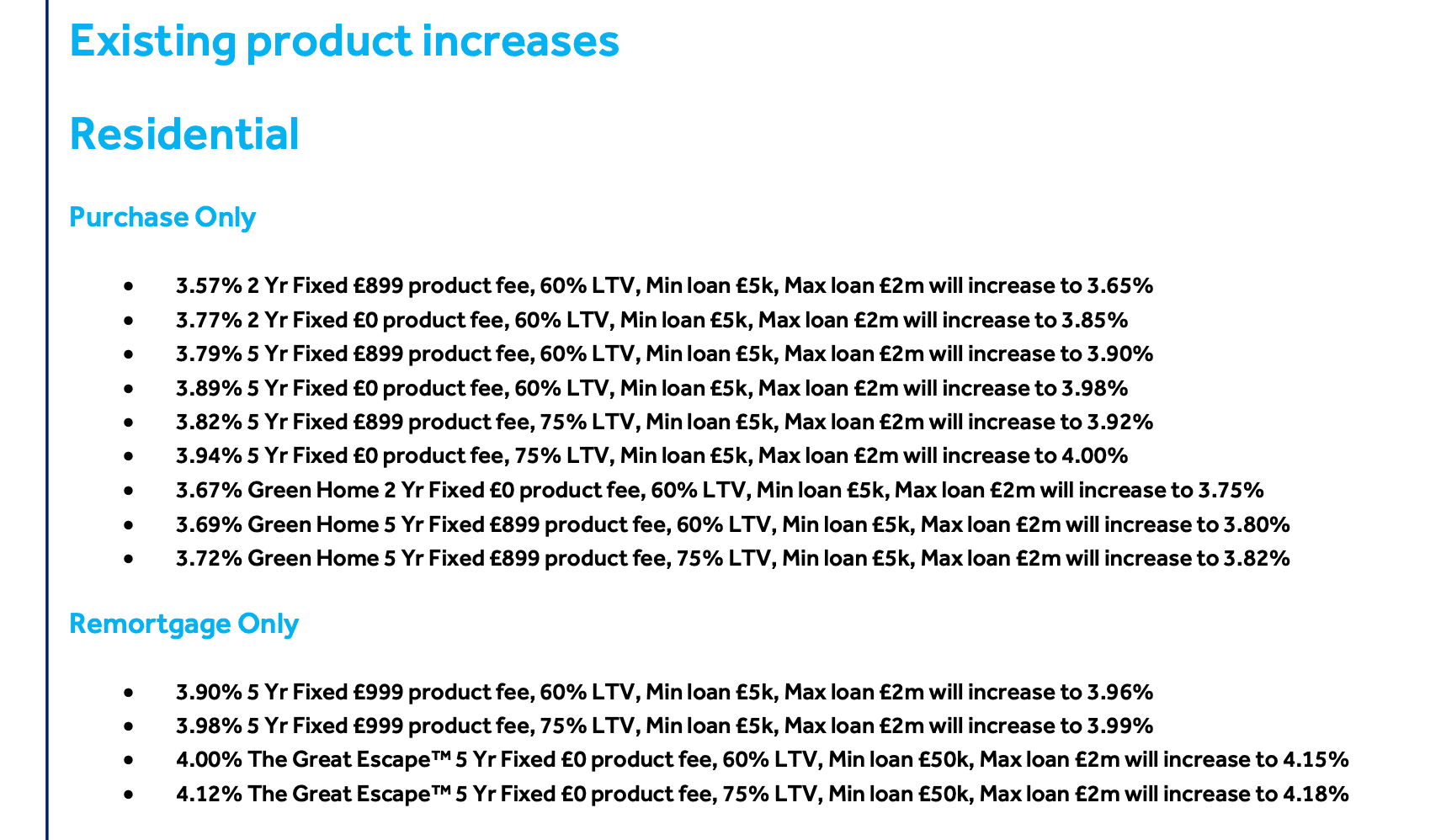
Barclays is increasing its mortgage rates across the board for fixed residential purchases and remortgages.

Details below.

  • What is your reaction to the increases?
  • Are they following HSBC and Nationwide's lead with their rises this week?
  • What does it say about the Bank of England's base rate decision tomorrow? 
  • What does it say about the mortgage/housing market?

Responses asap.
7 responses from the Newspage community

Copy all

Copy

Lenders are doing the Hokey Cokey at the moment with some reducing and some increasing rates. This week has seen several major lenders hike their interest rates as economists consider how quickly inflation will come down and how quickly the central bank will cut interest rates as a result. All in all it’s an indictment on the economy and Labours fiscal reputation that rates are heading northwards again.
Copy

For the 1.8 million mortgages that are due to mature this year, it is important not to think that rates will continue to fall in a straight line. If your deal in maturing this year speak to a broker who can guide you through the process. They can also keep an eye out if things improve something your own lender won’t necessarily do.
Copy

Another blow for borrowers as Barclays becomes the latest high street lender to increase rates. Barclays repricing upwards, following HSBC and Nationwide earlier in the week, shows how quickly things can turn. In the current climate, where one economic data set can influence markets in an instant, borrowers should take nothing for granted. Inflation rising and the fact we may not get as many cuts from the Bank of England this year as hoped means rates are edging up. The hope is that inflation starts to play ball again, and soon.
Copy

A perfect storm is driving Barclays' rate hike. Funding costs are up, with SONIA swaps rising since Jan 2nd and inflation hitting 3.4% in Dec. Add in the volatility of Trump’s "on-off" tariff stance and falling gold/silver prices, plus a "baked-in" hold from the BoE tomorrow, and the result is inevitable - lenders are pricing in higher rates.
Copy

Barclays follow HSBC and Nationwide in increasing rates in what is another clear setback for borrowers. Other lenders may well follow in the days ahead. Swap rates increasing means mortgages get more expensive for borrowers. We can only hope that this is a blip rather than the beginning of a longer term trend. The next set of inflation data will be key to the direction of travel for mortgage rates.
Copy

Barclays increasing their rates for their lower LTV products is a blow to the mortgage market, but not unexpected as mortgages lender air on the side of caution with the Bank of England meeting tomorrow and a cooling of any base rate reductions for the next couple of months or so. Higher than expected inflation figures were the main instigator for the rate rises we have seen from many mortgage lenders recently. If inflation can be tamed, i would expect the latest rate increases to be short lived, but right now lenders are not sure what to expect and will increase rates accordingly.
Copy

Barclays’ decision to increase mortgage rates across fixed residential purchases and remortgages is a clear sign that the recent downward momentum in pricing has stalled. While borrowers have enjoyed improved fixed-rate deals in recent months, this latest repricing suggests lenders are reacting to higher funding costs and shifting market expectations.

Barclays is not acting alone. The move follows similar increases from HSBC and Nationwide, reinforcing the view that lenders are adjusting to the same market pressures rather than making isolated pricing decisions.

It could also be seen as a correction after the sharp reductions in the final quarter of 2025, when lenders cut rates aggressively to win market share. With swap rates edging higher again, lenders are now rebuilding margins.

This repricing also hints that markets expect the Bank of England to remain cautious, with tomorrow’s base rate decision likely to be a hold and future cuts potentially slower than previously hoped.