Will the mansion tax affect London house prices? Agents and brokers on the £2m cliff edge
By Gabriel McKeown, Head of Research, Newspage ·
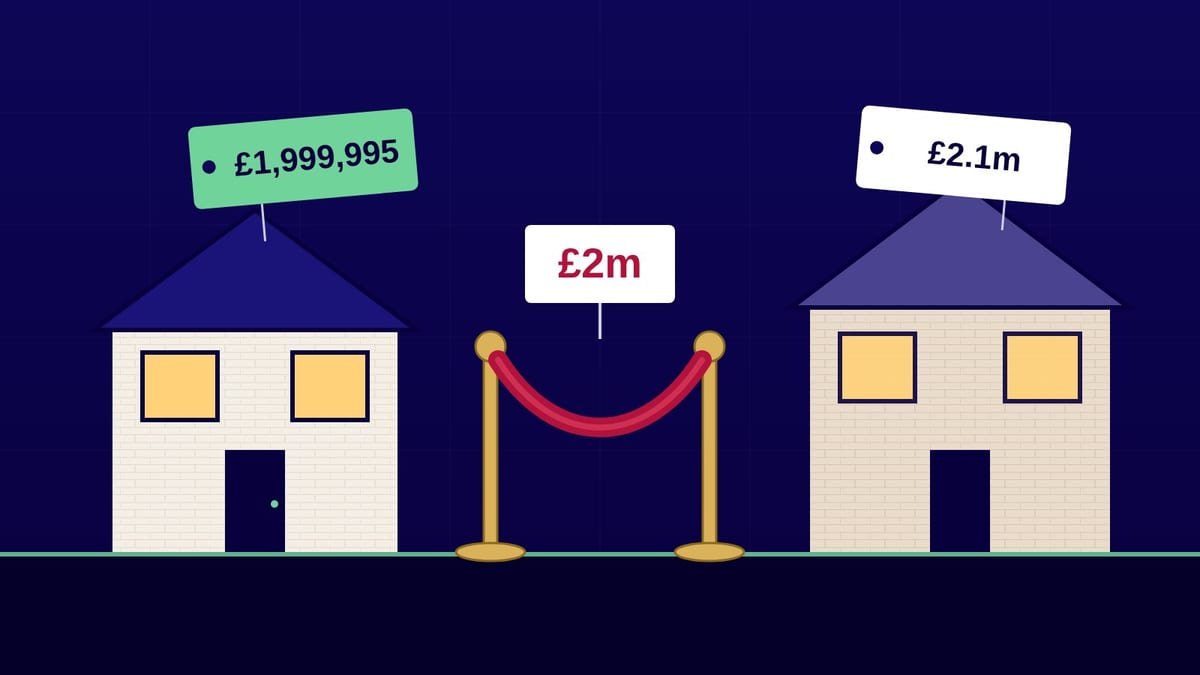
Will the mansion tax affect London house prices? Homes priced just above £2m look most exposed, with 83% of offers on homes priced within 10% of £2m now coming in below the threshold, up from 64% a year earlier, Hamptons data shows.
Mortgage brokers and advisers have told Newspage, commenting on a story sponsored by The London Broker, that the tax will put "an awkward velvet rope across the market at £2m", and urged sellers just above the line to "price realistically from day one".
From April 2028, owners of homes in England worth £2m or more will pay an annual surcharge of £2,500 to £7,500 on top of their council tax, according to the government.
The band each home falls into is set by the Valuation Office Agency's assessment of its value in April 2026, so a home priced just under £2m can still be caught.
Completed sales are also gathering below £2m. Of homes sold within £62,500 of £2m between December 2025 and July 2026, 63.8% went for less than £2m, up from 43.5% a year earlier, Tax Policy Associates' analysis of HM Land Registry data shows.
Experts said homes just above £2m are the most exposed, as buyers turn the annual bill into leverage to negotiate on price.
They said a sharp fall in prime London prices is unlikely, with the pressure concentrated in a "sticky patch just above the line", and that sellers should understand how their home is likely to be valued.
Will the mansion tax affect London house prices?
Most experts expect the mansion tax to leave prime London prices largely intact, but to drag on homes priced just above £2m. Buyers are likely to use the annual bill to negotiate on those homes, while sellers close to the line price beneath it.
Sellers are adjusting, with homes listed between £1.8m and £2m up 5.6% year on year in the two months after the Budget, while listings between £2m and £2.2m fell 6.5%, according to Hamptons.
The Office for Budget Responsibility (OBR) assumes the full cost of the surcharge will pass into the prices of the homes liable to pay it, with extra price falls for homes just above each band threshold.
Rupert Collingwood, Founder at London-based The London Broker, said there is already "hard evidence to suggest that there is 'bunching' of transactions below the £2m mark".
He added: "A similar effect used to occur when SDLT operated under the slab system. Certainly it is reasonable to expect that properties which might naturally sit just above the £2m threshold for the Mansion Tax could well be impacted downwards.
"Three natural behaviours will likely occur. Firstly, buyers will aim to get their purchase price under the threshold by offering under £2m. Secondly, vendors may price below the £2m threshold if they're within say 10%-15% of the £2m mark, and finally natural market forces will force vendors to lower their prices in order to attract buyers to make offers.
"I would expect the impact of the mansion tax to hit mostly the domestic house market, rather than luxury penthouses. For the international wealthy the tax is an inconvenience, whereas for many, the mansion tax is yet another regressive burden to add to their already stretched budgets."
How much is the mansion tax and who pays it?
The mansion tax is officially the High Value Council Tax Surcharge, and applies to residential property in England worth £2m or more, according to the government.
It takes effect from April 2028 and is paid by owners rather than occupiers, on top of their normal council tax.
Owners will pay £2,500 a year on homes worth £2m to £2.5m, £3,500 on homes worth £2.5m to £3.5m, £5,000 on homes worth £3.5m to £5m, and £7,500 on homes worth £5m and above.
The charges will rise with CPI inflation each year from 2029-30, and fewer than 1% of homes in England are expected to be above £2m.
David Stirling, Independent Financial Adviser at Belfast-based Mint Wealth, said the mansion tax "probably won't demolish prime London prices, but it will create a distinctly uncomfortable no-man's-land just above £2m".
He added: "Buyers will take ten years of a £2,500 annual charge, turn it into a £25,000 negotiating stick and then hit the seller with it.
"Trophy-home buyers are unlikely to abandon a £10m purchase over another £7,500 a year, but the owner asking £2.1m may discover that £1.95m suddenly has a magnetic pull.
"The real distortion will be around the threshold, where perfectly normal London family homes will be marketed at £1,999,995 and described as 'not technically a mansion'."
Can you avoid the mansion tax by selling for under £2m?
The surcharge is based on the Valuation Office Agency's (VOA) assessment of a home's value as at April 2026, rather than the price it sells for, the government says.
The VOA is valuing homes using comparable sales, property type, age, number of rooms and location, through a model-assisted approach checked by professional valuers.
Owners will see draft bands in autumn 2027, ahead of the first bills in March 2028, and homes will be revalued every five years, with the next revaluation due in 2033.
Andrew Montlake, CEO at London-based Coreco, said: "This tax will not take a wrecking ball to London prices, but it will put an awkward velvet rope across the market at £2m. Market data shows sales gathering just below it.
"Putting £1,999,999 on the price tag is no magic trick, though, because the government's valuers will decide whether it falls above or below the line. Homes only just over £2m look most exposed, especially when buyers can find something similar just under.
"£2,500 a year may seem small beside the purchase price, but buyers at this level still count the pennies, just with more zeroes, and they will use the bill to chip away at the price.
"Sellers between £2m and £2.5m need to price for the market we have, not the one they wish we had. A genuinely special home will still sell, but hopeful pricing will get short shrift. This tax probably will not sink prime London, but it will create a sticky patch just above the line."
Which London homes will be hit hardest?
London is home to 66.4% of homes in England worth more than £2m, analysis by e.surv shows.
Kensington and Chelsea and Westminster alone account for a quarter of all homes liable for the surcharge, with around 21% of homes in Kensington and Chelsea and 13% in Westminster worth more than £2m.
Tony Redondo, Founder at Newquay-based Cosmos Currency Exchange, said the top end of prime London has "taken a harder hit", blaming "non-dom tax changes, higher stamp duty surcharges and a holding tax on the way".
He added: "Sellers are bunching asking prices just under £2m to dodge the £2,500 annual levy, while buyers above it are weaponising the surcharge, capitalising the liability over their holding period and demanding outsized discounts. That's friction, not contagion across the HNW market.
"Sellers at £2m to £2.5m should price realistically from day one, sell lower-tier homes on their tax efficiency, and move decisively before resistance hardens as implementation nears."
What should you do if you're selling a home worth £2m to £2.5m?
Homes in the lowest band, between £2m and £2.5m, will pay £2,500 a year from April 2028, with the charge rising in line with inflation from 2029-30.
Buyers looking just above £2m also have plenty of alternatives below it, with around 145,000 homes in England valued between £1.5m and £2m, compared with around 130,000 above £2m, Hamptons estimates.
Experts say sellers should price realistically, understand how the VOA is likely to value their home and prepare for buyers to negotiate on the annual cost.
Nouran Moustafa, Practice Principal and IFA at Roxton Wealth, said: "The biggest mistake would be assuming a £2,500 annual tax cannot influence the price of a £2 million property. Wealthy buyers understand numbers, and they negotiate accordingly.
"I expect properties sitting around the £2 million threshold to face greater price sensitivity, particularly where buyers have several comparable options.
"But there's an important distinction: selling a property for £1.99 million doesn't automatically exempt it. The surcharge is based on the Valuation Office's assessment, not simply the agreed sale price.
"The pressure could be particularly noticeable in prime London locations such as Kensington, Chelsea and Westminster. I'd advise sellers to price realistically, understand their property's likely valuation and avoid assuming buyers will simply absorb the additional cost.
"A £2 million property doesn't suddenly become undesirable because of a £2,500 tax. But it gives buyers another reason to negotiate, and sellers another reason to reconsider their asking price."
Your questions answered
Questions answered by Rupert Collingwood, Founder at London-based The London Broker.
When does the mansion tax start, and how much will I pay?
The tax comes into force in April 2028, and how much you pay will depend on the value of the house. There are 4 bands in total with costs starting at £2,500 per year for homes between £2m - £2.5m, £3,500 per year from £2.5-3.5m, £5,000 per year from £3.5-5m and £7,500 per year above £5m.
If I sell my home for under £2m, does that mean the buyer won't pay the mansion tax?
No, it does not mean that the buyer won't automatically pay the tax. The government intends to assess property values, and the last sale value is just part of that assessment.
Should I price my home just under £2m?
It depends on the expected value of your home currently and, to an extent, what you're selling. It is likely that the tax will impact different properties in different ways. So best to take advice from local agents who are up to speed on the feedback they're receiving in the market or other local market experts.
Will the mansion tax make a home worth £2m to £2.5m harder to sell?
Certainly, any tax on any product which impacts the cost of running and owning that product will have an effect. In real terms the cost at the £2-£2.5m level amounts to just under £210 a month. Whilst this isn't nothing, for the right buyer it's a cost of owning that asset, and as values move and settle, this will simply get absorbed into the overall picture of the market.
What should I do now if I'm selling a home near £2m?
Keep an eye on progress and make sure you’re engaged with your agent to understand if the possible impact of the mansion tax is being fed back to them as a consideration for buyers. This will be particularly important around the various thresholds where the impacts will be more prevalent.