
Copy article

Swaps soar

ended 03. March 2026

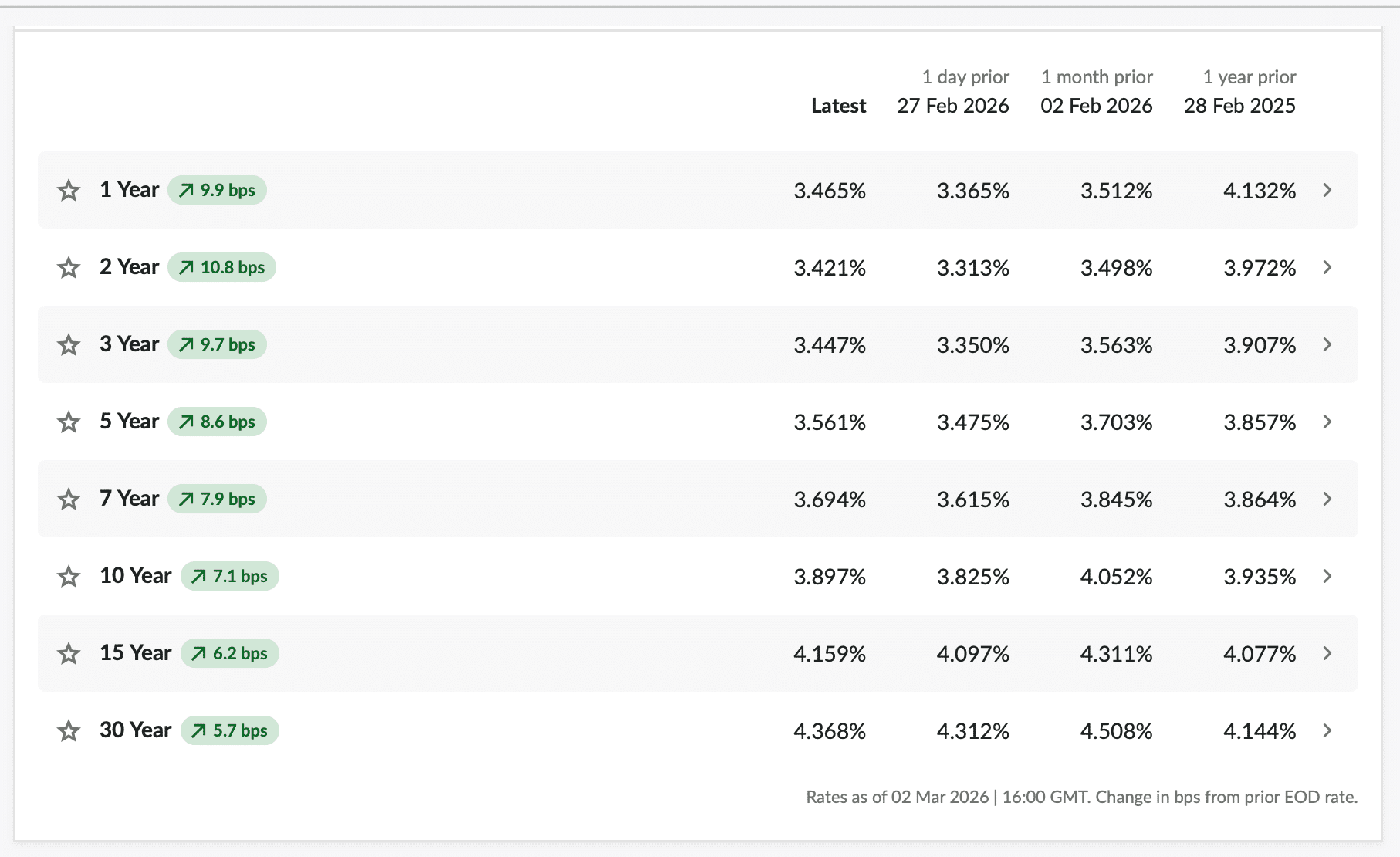
Swap rates rose sharply Monday as markets priced in the potential inflationary threat of events in the Middle East, with the 2-year and 5-year up 10.8bps and 8.6bps respectively. Though Santander cut rates at higher LTVs earlier, which direction are you expecting mortgage rates to head in this week?


8 responses from the Newspage community

Copy all

Copy

Swap rates have jumped as markets quickly priced in the inflation risk linked to Middle East tensions, particularly the potential for higher energy prices. Because lenders fund fixed mortgages via swaps, this move is likely to slow and possibly temporarily halt the recent momentum of rate cuts. While Santander’s reductions at higher LTVs show competition remains strong, lenders won’t ignore a sustained rise in funding costs. If swap rates stay elevated this week, we could see mortgage pricing stabilise or edge slightly higher rather than continue falling. That said, this looks more like short-term market volatility than a long-term turning point. Mortgage rates are increasingly sensitive to global events, and this is another reminder that trying to “time the market” rarely works, borrowers should focus on securing a deal that suits their own circumstances rather than chasing headlines.
Copy

Expect higher swap rates to stem the recent reduction of mortgage rates. Andrew Bailey’s comment last week that inflation falling to 2% is ‘baked on’ is looking increasingly ridiculous (as I stated last week) as UK face a huge increase in the import price of LNG due to Qatar halting production and oil surged 9% today. What now of Millibands promise that utility bills will fall and leaving huge reserves of fossil fuels off the coast of the UK in the North Sea is unforgivable in the current climate
Copy

The move in swap rates looks more like short term market anxiety than a structural shift.
Whenever we see geopolitical escalation, markets react first and analyse later. Gold rises, equities wobble, and swaps move sharply as traders price in potential inflation risk. But that doesn’t automatically translate into lenders rushing to reprice mortgage products.
Lenders have spent the last three years navigating instability. What they want now is consistency. The mortgage market has only recently regained a degree of confidence, and there is very little appetite to disrupt that unless the move in funding costs proves sustained.
At most, we may see some lenders pause further rate cuts while they assess conditions. If there are increases, they are likely to be marginal tactical adjustments rather than aggressive repricing.
Mortgage pricing is driven by sustained trends, not single trading sessions. Unless swap rates remain elevated for a prolonged period,I’d expect lenders to choose stability
Copy

Geopolitical shocks don't respect base rate forecasts. With 2-year swaps up 10.8bps in a single session, lenders monitoring funding costs will think twice before cutting further, whatever Santander's latest move suggests. Rising LNG import costs and a 9% surge in oil aren't minor footnotes.
If you're waiting for mortgage rates to fall further, that window may have just narrowed. This looks more like short-term volatility than a structural shift, but sustained pressure on swap rates will slow lenders down. Focus on a deal that suits your circumstances now, not the next headline.
Copy

Swap rates moving 10bps in a day gets attention, but one day's movement doesn't set the week's direction. Markets are reacting to geopolitical risk, which tends to be sharp but short-lived unless it feeds through into sustained inflation expectations. Santander cutting rates suggests lenders aren't panicking, they're still competing for business. My expectation is that any rate increases this week will be modest and targeted, and the monthly trend downward remains intact. If the Middle East situation escalates materially, that changes. But we're not there yet.
Copy

Unfortunately, mortgage rate increases will be inevitable amid the conflict, principally due to the threat of inflation spiking as oil and fuel costs rise. Decisions on rate changes do take a few days, so there is still time to organise your new mortgage and lock in some of the better pricing seen in the last few years. Is this a short-term issue? Probably, but no harm in securing now to see if rates improve in a few weeks, it's normally easy to switch at a later time.
Copy

I hope this is a knee jerk reaction which will settle back to normality. Prepare to lock in now and see what this rollercoaster ride does.
Copy

Those of you with a soft disposition may want to lock in now. It’s likely that these rate drops will be reversed by this time next week or sooner if conflict continues or escalates further. Santander may be trying to scoop up some extra business before buyer sentiment puckers-up the purse strings. If oil and gas become shorter in supply, the price will be reflected in our own inflationary measures, ramping up rates and possibly driving down confidence.