
Copy article

Tenants spend an average 34.2% of income on rent in England, 27.2% in Wales: "nothing less than painful"

ended 28. October 2024

The Office for National Statistics has just published a new report, Private rental affordability, England and Wales: 2023. It shows that private renters on a median household income could expect to spend 34.2% of their income on a median-priced rented home in England, compared with 27.2% in Wales, in the financial year ending March 2023. Other key findings below. Newspage asked experts for their views, bottom.

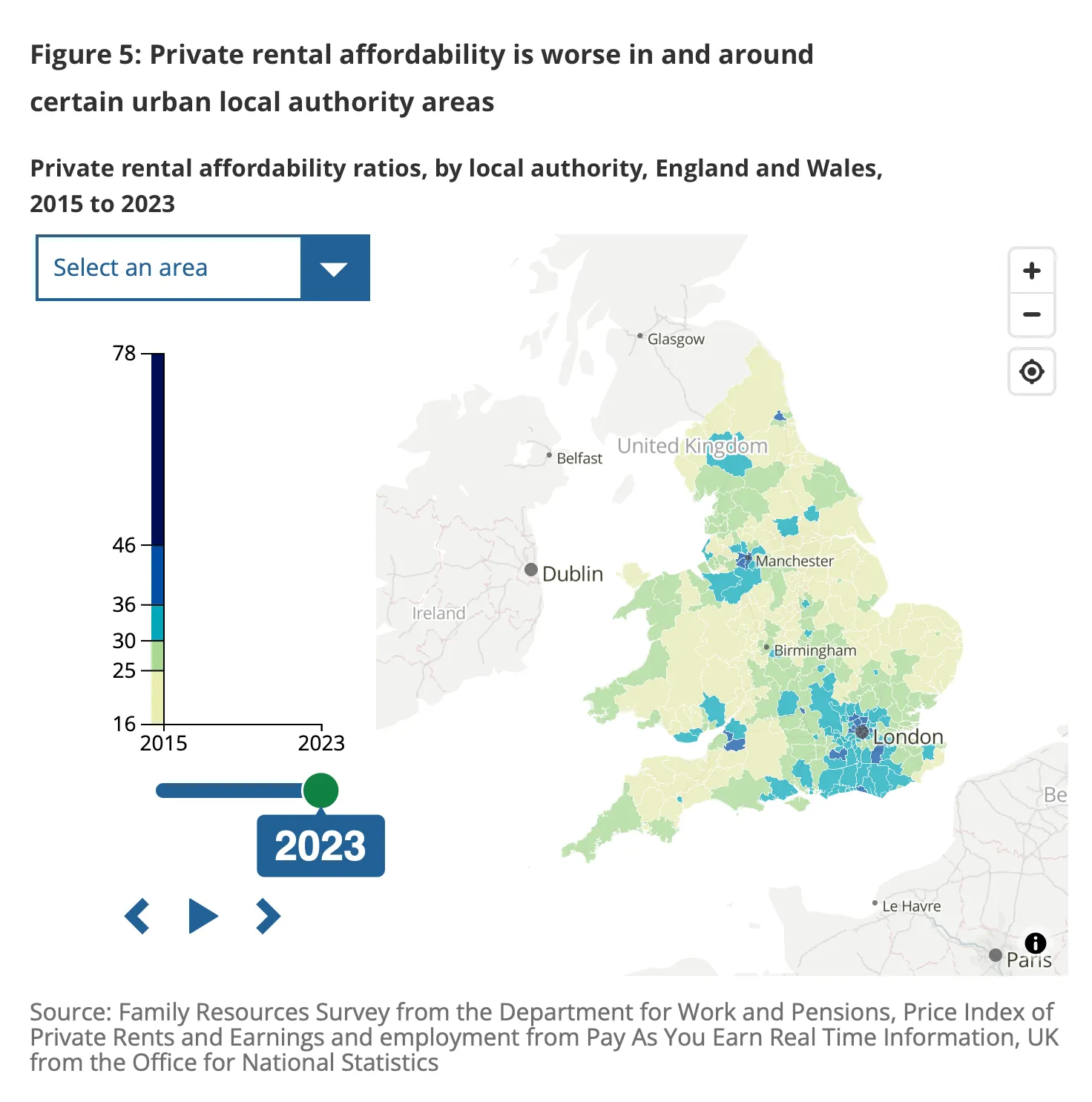
  • Private rents in London, the North West and South East cost more than 30% of a private renting household’s income in 2023
  • In London, average rents have been between 57.2% (Kensington & Chelsea) and 39.8% of private-rented household incomes since 2015
  • The most affordable regions for private rent in 2023 were the West Midlands, the North East, and Yorkshire and The Humber
  • Private rental affordability is worse in and around certain urban local authority areas
 

5 responses from the Newspage community

Copy all

Copy

Higher mortgage rates for landlords and an ongoing lack of property means rents are eating a significant percentage of many people's incomes. This is especially the case in the London, the South east and cities such as Manchester. With such a big chunk of your income taken away in rent, it makes it extremely difficult for many to save for a deposit. Let's hope the Bank of England cuts the base rate again next month, as that could enable more first-time buyers to get onto the ladder.
Copy

The percentage of income that goes on rent is nothing less than painful for many tenants. This is especially the case in London and parts of the South east where as much as half of what you earn can often go to your landlord. It makes getting onto the property ladder even more challenging as saving up for a deposit can be really difficult.
Copy

When did renting become more expensive than a Mayfair shopping spree? The latest ONS figures show tenants in England are forking out a whopping 34.2% of their income just to keep a roof over their heads, while Welsh renters get a slightly gentler squeeze at 27.2%. London, predictably, takes the crown for financial pain - with some areas like Kensington & Chelsea demanding an eye-watering 57.2% of tenant incomes. That's not just expensive, that's "maybe I should live in a treehouse" territory. There are some relative bargains to be found in the West Midlands, North East, and Yorkshire, but "affordable" here is rather like calling a modest headache better than a migraine. The urban-rural divide is stark, with city dwellers particularly feeling the pinch.
These figures aren't just statistics but represent a genuine affordability crisis that's forcing many to choose between heating and eating. Something's got to give, and it probably shouldn't be dinner.
Copy

Rents are sky-high at the moment and unaffordable for many. This is partly a result of rising mortgage costs for landlords, but mainly due to an acute shortage of property from decades of underinvestment in housebuilding and social housing. Rental reforms, including the abolishment of Section 21 no-fault evictions, will help a little, but mostly we just need to get on with building affordable housing. If that means upsetting a few NIMBYs, then so be it.
Copy

Spending 34.2% of household income on rent isn’t just a financial strain, it’s a sign of a housing market under real pressure. This isn’t simply about private landlords charging more, it’s symptomatic of failed social housing policy affecting both renters and landlords alike. Tenants face rising risks of defaulting on their rents, while landlords, shouldering higher costs and tighter regulations, are increasingly at risk of repossession. When housing becomes this unaffordable, the repercussions ripple through communities, leading to unstable tenancies, mounting debt and a shrinking supply of rental homes as landlords are forced out of the market. We’re witnessing the harsh consequences of trickle-down economics, and without urgent intervention, the impact on both renters and landlords will only get worse.