
How easyJet's latest results may give house prices a lift
easyJet's latest results have alleviated fears of a slowdown in holiday spending with revenue per seat edges higher. This shows that consumers are trading up as the airline reiterates its outlook for the year.
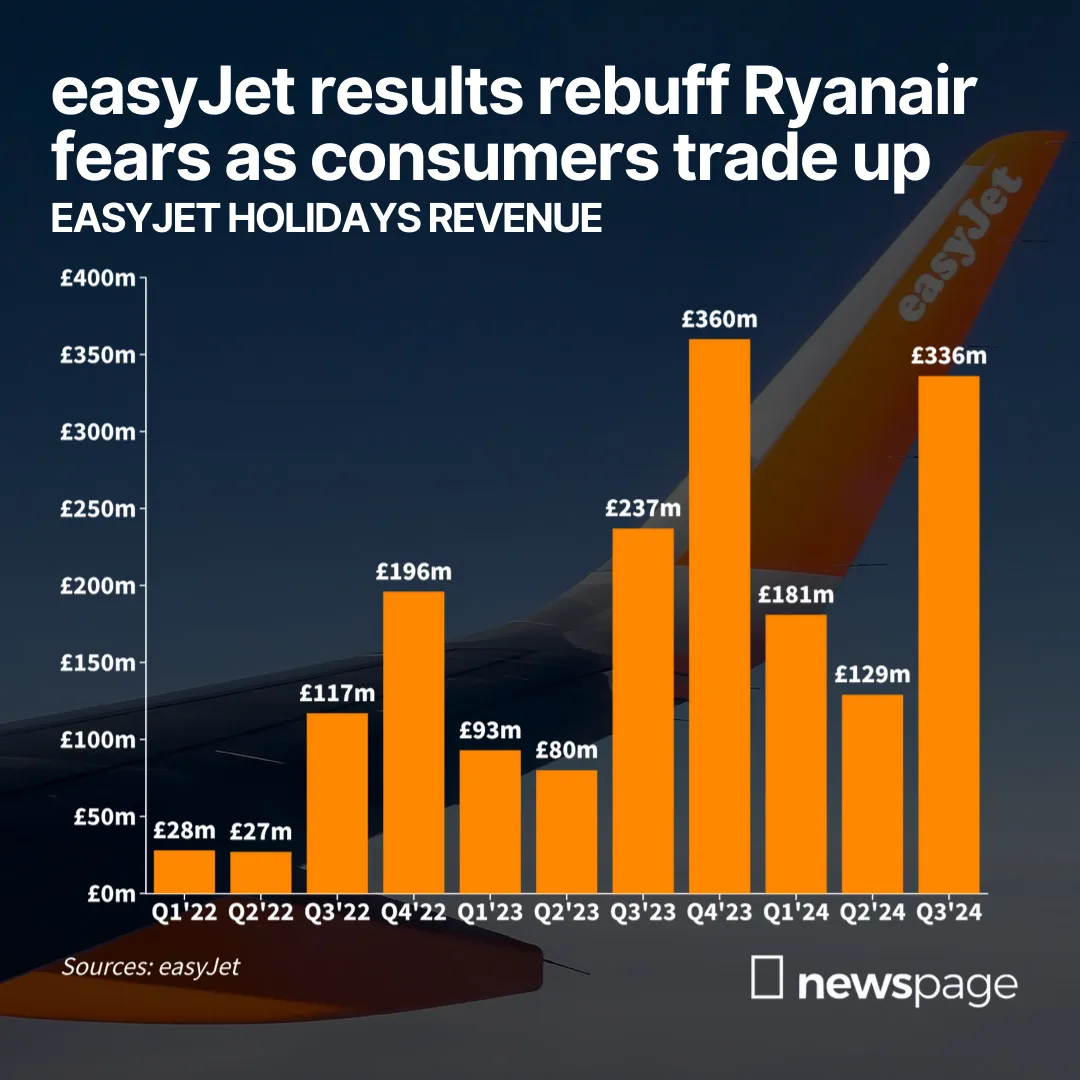
After Ryanair's results spooked investors on Monday due to a potential slowdown in consumer spending, easyJet alleviated such fears this morning with its Q3 results, as revenue per seat edged higher thanks to an increase in ancillary spending (add-ons like food, priority boarding, insurance). This shows that consumers are trading up, which could spell good news for house prices.
How so? Well, with customers now trading up, it's likely that consumer confidence is rising as a result of Brits feeling much better about their finances. The latest GfK Consumer Confidence survey indicates this, and this morning's flash PMI data suggest the same as well, with business confidence even rebounding from its dip in June.
Still, naysayers will point to fare prices dropping as an indication of weaker demand, as they did with Ryanair. The Irish airline cited their customers pulling back on spending as forward bookings came in way below expectations. However, this doesn't look to be the case with easyJet, as its fares were down by only 1% in Q3, as compared to Ryanair's massive fall of 15%.
Another factor to note is that the lower fares for easyJet don't necessarily equate to lower demand either. It's worth highlighting that the budget operator is lapping some high fares last year when fuel prices were higher and capacity was more constrained. But with more aircraft now in the fleet, airlines can afford to employ better economies of scale.
In fact, there are a couple more points to prove that demand isn't cooling. For one, forward bookings for the orange airline in the autumn and winter are actually up from last year. Secondly, easyJet's packaged holidays segment continues to grow rapidly (42%). The board even upgraded their outlook for the division's pre-tax profits by another £10m to more than £180m.
What's more, the latest survey conducted by AMEX shows that a third of Britons are still planning to go on a holiday. To complement this, approximately 40% of Brits still plan to increase their spending when abroad. Taking all this into consideration, the data would point towards an improving consumer.
House prices have stagnated in growth in recent months. Thus, with consumers now feeling less of a pinch, this could give the housing market a much-needed boost going into the autumn, especially with lower mortgage rates, and higher LTV products now coming back on the market. And with a rate cut on the brink, consumer confidence should continue rising into Q4 which should help to push annualised house price growth above the current 1% mark.
Publishers: if you use any, or all, of the copy above or responses in this News Alert, please credit Newspage, e.g. "Speaking to the Newspage news agency, XXXX said...". For ease, all, or individual quotes, or all of the article, can be copied.


