Copy article

End of easy money: UK households braced for stagflation pain

ended 22. September 2025

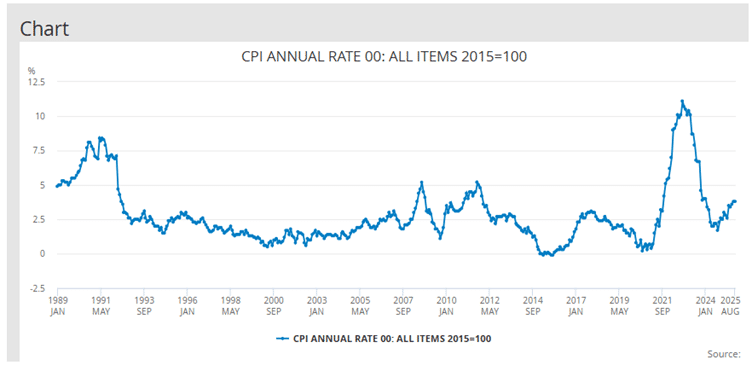
The UK is facing renewed inflationary pressures even as growth stalls, raising fears of a return to stagflation. With food and energy costs proving stubborn, wage growth under pressure, and government borrowing costs mounting, the balance between monetary tightening and political promises on spending is becoming ever more precarious. Experts warn that higher debt service costs may lock in inflation, while households feel squeezed by rising mortgage payments, shrinking disposable income, and weak currency confidence.A graph showing a line of growth
AI-generated content may be incorrect.

Source ONS

  • How realistic is the risk of stagflation in the UK, and what would that mean for households and small businesses?
  • With debt interest now consuming a record share of government spending, how can policymakers curb inflation without triggering a fiscal or housing crisis?
  • What lessons should the UK take from past inflationary episodes, such as the 1970s, to avoid repeating history in 2025–26?


7 responses from the Newspage community

Copy all

Star Quote
Copy

The UK is heading into the nastiest combination of collapsing economic activity and collapsing currency power — in other words, stagflation of the worst kind. Inflation is not just about higher prices, it is the destruction of the purchasing power of money, and that is what we are seeing now. With interest rates still high at 4% while the economy slows, households are caught in a pincer movement: mortgage costs are climbing, disposable income is being eroded, and the value of sterling is under pressure. This is not just a repeat of the 1970s. Back then, Britain had the relief of North Sea oil coming on stream. Today the North Sea is being taxed out of existence and the UK has no productivity engine to underpin the pound. The consequence is stagflation of a far more dangerous form — an outright fiat currency crisis where loss of confidence accelerates the devaluation of money faster than wages or savings can keep up.
Copy

Stagflation is a risk, though not inevitable. The real problem is a lack of credible growth plans. Households and business owners can’t rely on policy — they should review borrowing, stress-test budgets, and diversify investments. Cash feels safe but loses value if we have high inflation; global investments may offer better protection, with a balance between short-term cash and long-term growth.
Copy

The stagflation show is back in town and this time the tickets cost all your disposable income. Britain’s economy is starting to look like a three-ring circus with inflation playing ringmaster, households juggling bills and mortgage rates walking the tightrope act that nobody asked for. And in the end small businesses have been left cleaning up after the elephants.
Copy

The UK economy resembles a patient with a fever who keeps getting prescribed more medicine that makes them sicker. With government debt interest eating up record chunks of spending whilst growth flatlines, we're staring down the barrel of proper stagflation, not just a rough patch.
Your household budget is about to feel this squeeze hard. Mortgage payments climb while your wages barely budge, creating a nasty pincer movement that leaves families with less money for everything else. Small businesses face the same trap: borrowing costs rise, customers spend less, yet bills keep mounting. Review your finances now, stress-test your budget for higher rates, and consider moving some savings into assets that historically outpace inflation rather than watching cash lose value in the bank.
Copy

For my clients the squeeze now means higher childcare costs alongside bigger food bills and rising mortgage payments as cheap fixed deals end. Even when salaries go up, the gains are quickly eaten away. For small businesses, higher running costs, more expensive borrowing, and weaker demand make it harder to cover taxes and bills. Both households and firms are left with less breathing room and a higher risk of falling behind.
Copy

There is zero risk that the UK faces stagflation as we are already there and significantly impacting households and businesses. UK economic growth has already flatlined with 3.8% inflation, nearly double the BoE’s target. Households face a devastating squeeze from rising prices, subdued wages, and rising unemployment. Small businesses are hit by higher costs and reduced demand. Debt servicing now exceeds defence/education spending at 96.4% debt-to-GDP, creating a vicious cycle. Policymakers face a trilemma. Aggressive interest rate rises risk a housing crisis as mortgage rates soar, but low rates entrench inflation. Fiscal consolidation deepens an economic slowdown, but continued spending fuels inflationary pressures. Lessons from the 1970s. Half-measures backfire, allowing inflation to embed in wages/pricing. Solution needs coordinated policy prioritizing inflation control despite short-term pain. This Government lacks the political will and backbone to deliver the necessary medicine.
Copy

UK risks sleepwalking into 1970s-style stagflation, households squeezed, businesses stalled, and confidence at stake. The risk of stagflation is real, because the UK is already caught in the uncomfortable mix of stubborn prices and stagnant growth. For households, that means pay packets stretched further while mortgage and food costs climb; for small businesses, it means higher borrowing costs but weaker demand from customers. The lesson from the 1970s is clear: delay only makes the pain worse. Policymakers need credibility above all, that means tackling inflation decisively, but without loading so much pressure onto housing and small firms that they break. If we stumble into stagflation, it will be not just an economic crisis, but a crisis of confidence