Copy article

TSB, Santander, Barclays, Nottingham, Skipton BS - Rates are climbing

ended 07. September 2026

Several high street lenders have announced rate increases as the cost of funds continues to rise in global money markets.

Barclays - up 0.15% on most fixed deals

https://ddlnk.net/c/AQi8ygcQhLWrARjMq8qSASC2mJIjKOS_kRNiFIxF6OuY3-7_a5TxvmoKAL0SYbeF76XfcqJTEWBR_w

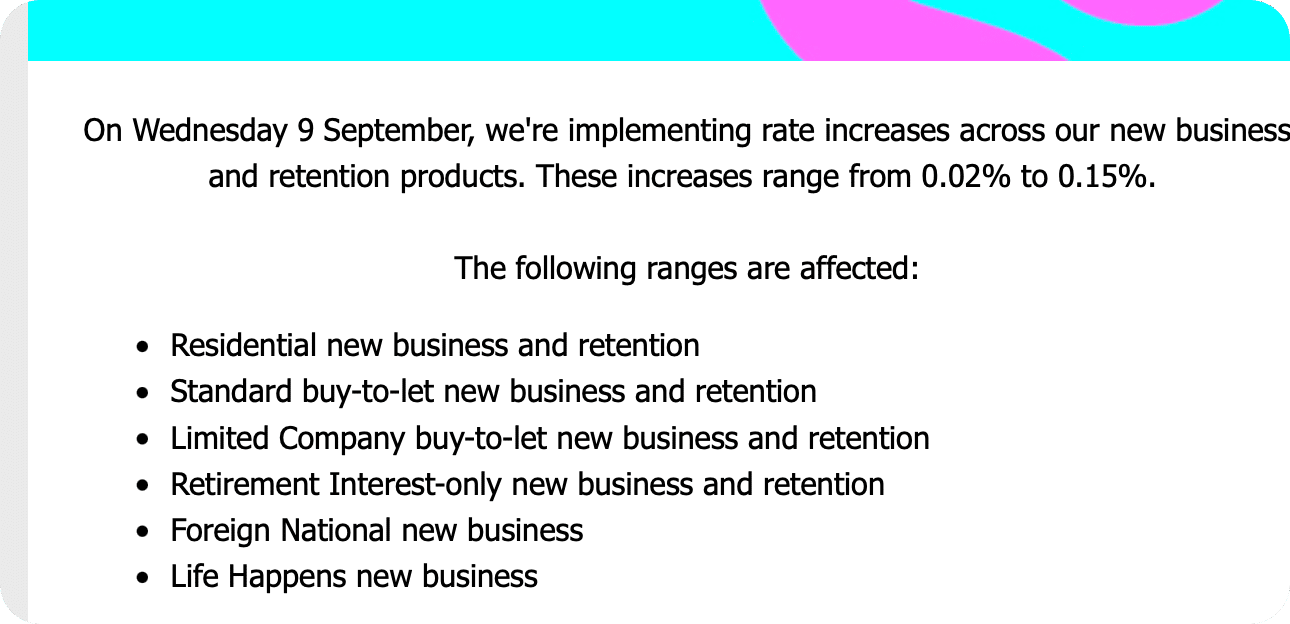
Skipton

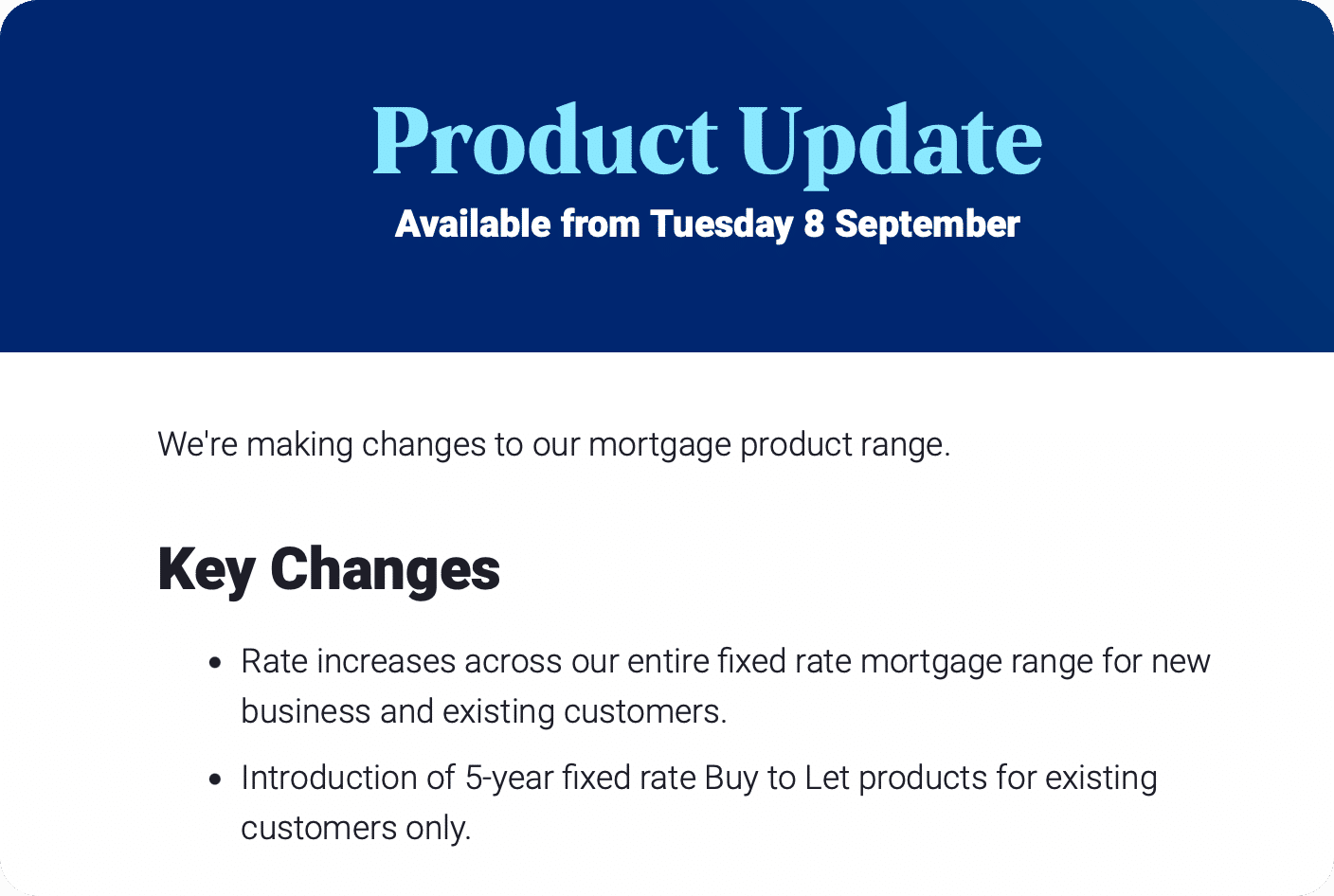
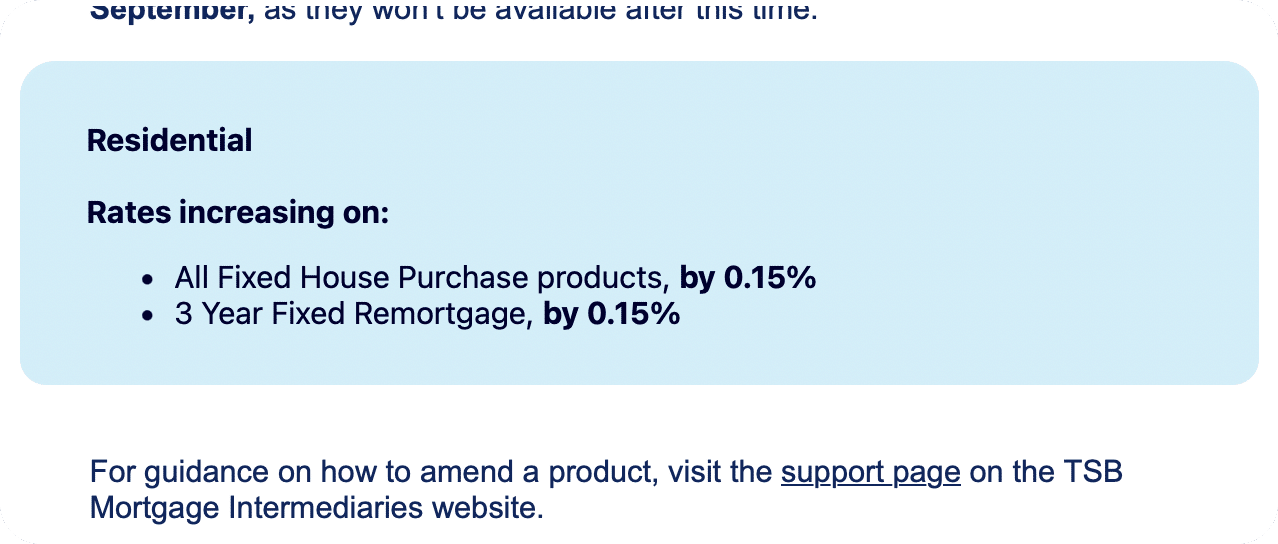
 TSB

Santander - https://www.santanderforintermediaries.co.uk/media/kqtjp5mw/new-business-rate-changes-8-september-2026.pdf


Nottingham BS

With significant volumes of change within the mainstream market its clear about the effects, next steps for borrowers, etc. Comment away…


8 responses from the Newspage community

Copy all

Star Quote
Copy

Significant change from many of the mainstream lenders, adding to changes announced by others last week. Mortgage borrowers still have a few hours to bag a new deal if their mortgage is due for a renewal shortly; first-time buyers and home movers will need to budget for these rate hikes. Higher mortgage rates will always slow the property market, especially when certain sectors and locations in the UK are already struggling. The government need to react quickly and effectively to boost the housing sector and the overall economy before this spirals out of control.
Copy

Escalating conflict in the Middle East has spiked energy prices and supply risks, reigniting inflation fears and prompting money markets to bet on central bank rates staying higher for longer. As swap rates rise, banks must quickly lift deal pricing to protect margins.

For borrowers, waiting could prove expensive. Anyone with deals expiring within six months should act now to secure current rates before further hikes filter through.
Copy

With several mainstream lenders now increasing rates in quick succession, this is clearly no longer about one or two isolated repricings. The direction of travel across the market has shifted.

For borrowers, the important point is that mortgage pricing can change faster than Bank Rate because lenders respond to wholesale funding costs and market expectations. If that pressure persists, the range of more competitive fixed deals could continue to narrow, even without any change from the Bank of England.
Copy

This is the mainstream catching up. Last week it was mainly specialist lenders and the odd big name repricing; now five high-street names have moved in a matter of days, and when they shift together like this it points to the wholesale cost of funding rather than any one lender's book. Swap rates have drifted up and that feeds straight into fixed pricing, so the cheaper deals are being pulled and reworked across the board. For anyone coming off a fixed rate or buying, the practical point is that a rate can usually be secured a few months ahead and still reviewed if pricing improves before you complete, which is where a broker earns their keep in a fast market. I'd still avoid reading this as a one-way street. Swap moves reverse as quickly as they arrive, and a lot rides on the Budget. The bigger picture is unchanged: the monthly cost of borrowing is still stretched, and that, more than any 0.15%, is what keeps the market subdued.
Copy

Several lenders repricing at around the same time matters more than any single rate increase. Borrowers approaching the end of a fixed deal should review their options early, because a product available today may disappear before they are ready to apply.

That does not mean fixing at any price. The total cost, fees and flexibility all matter, and borrowers may be able to secure a rate while reviewing their options again if pricing improves before completion.

The effect also reaches specialist finance. Through Bridging Loan Directory’s reporting, we see borrowers using bridging finance with an intended exit onto a residential, buy-to-let or commercial mortgage. If rates rise during the bridging term, that refinance may become more expensive or provide less borrowing than originally expected. The exit should therefore be tested against higher rates at the outset and reviewed throughout the term.


Copy

This coordinated rate surge from high street giants like Barclays and Santander is a painful reality check for borrowers. Rising funding costs in global money markets are forcing banks to protect their margins, completely halting the recent competitive mortgage price wars and pushing mainstream fixed deals higher.

For everyday households, the window of cheap borrowing is slamming shut. Those currently on standard variable rates or sitting on tracker deals will feel the squeeze immediately, while anyone with a fixed-rate product expiring in the next six months faces a significant payment shock when they are forced to refinance.

The absolute next step for borrowers is to stop waiting for rates to fall and lock in a deal now. Some lenders allow you to secure a product up to six months before your current term ends. Securing a rate today provides a vital insurance policy against further market increases, and you can still switch if a cheaper deal miraculously appears.
Copy

Nobody at these lenders wants to put rates up. Barclays, Santander, TSB, Skipton and Nottingham all moving in the same week tells you this is the market talking, and when five move together, the rest usually follow. The cause is simple: borrowing costs more, with a Government that can't stop spending doing nothing to calm nerves. Borrowers with fixes ending this year now have a choice: grab a rate while it's there. Most lenders let you switch if something better turns up, but you can't reclaim a rate once it's gone.
Copy

If you've been holding out for cheaper rates, waiting has now cost you money. This is just another climb on the rates roller coaster we've been on all year.

Markets are spooked by the scale of government borrowing and there's no clarity yet on how the Budget plans to deal with it. That's pushed bond and gilt yields higher over the past week or so, and lenders were always going to react.

What you need to do now is act. Secure a rate. Most lenders will let you switch to a better one before completion if the market turns, so there's very little to lose by moving and plenty to lose by stalling.

This is the first batch of increases, not the last. I'd expect more.