
Copy article

Retail sales fall by 2.7% in May

ended 20. June 2025

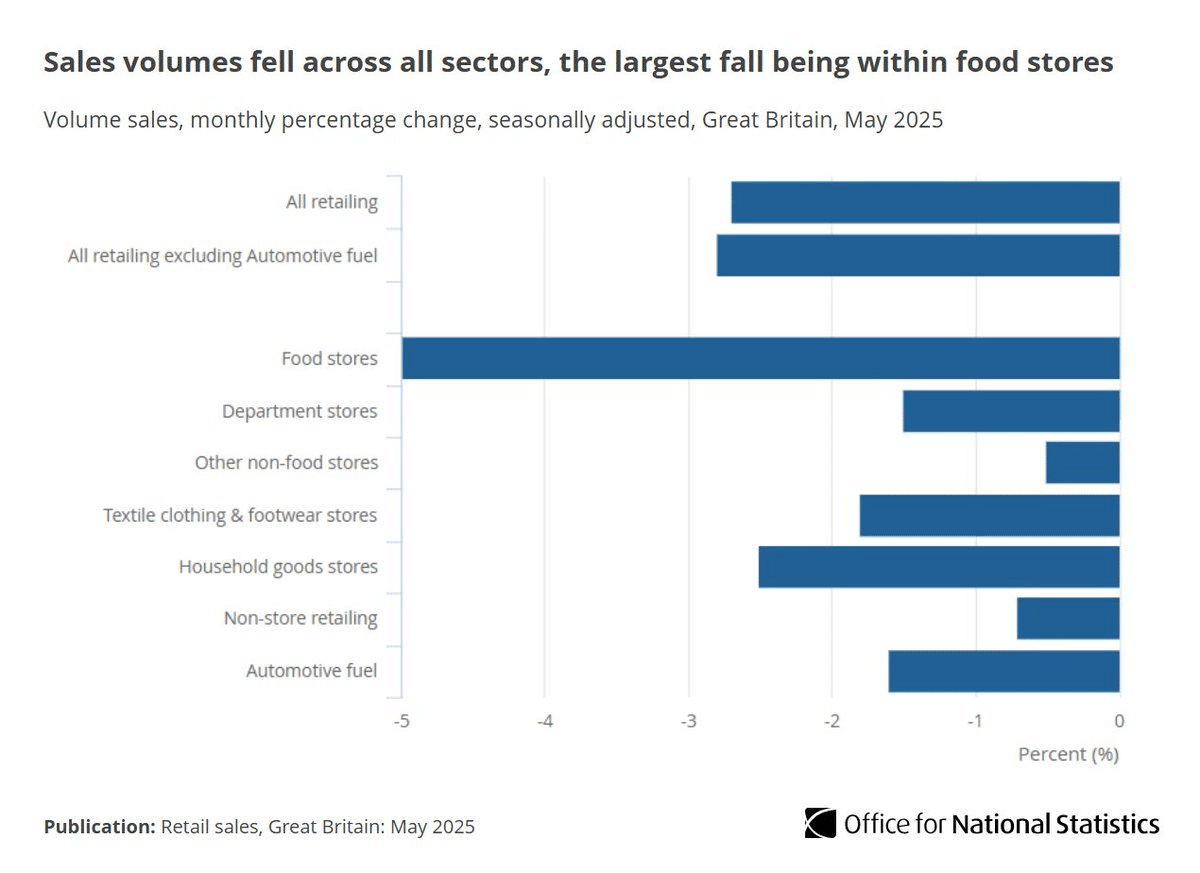
Retail sales volumes fell by 2.7% in May, following a rise of 1.3% in April (revised up from a rise of 1.2%), according to official data published this morning. This was the largest monthly fall since December 2023. Food store sales volumes fell back in May, following strong sales in April. Feedback suggested reduced purchases for alcohol and tobacco with customers choosing to make cutbacks. Clothing and household goods stores reported slow trading due to reduced footfall. As a retailer, what are you seeing on the ground? With inflation at 3.4%, and the cost of living crisis still biting, are consumers still wary of spending (or spending as much)? What trends are you seeing and are you confident about the summer months? Do you feel Government policy and tax changes since April are weighing down on consumers and have you had to increase your own prices as a result? Any thoughts, send them across by 09:30 at the latest as we will issuing your views to the media this morning.



 

3 responses from the Newspage community

Copy all

Copy

The retail sector faces a tough summer. The ‘Awful April’ tax hikes plus rising inflation have inevitably led to the 2.7% drop in retail sales volumes in May 2025, the largest since December 2023, which aligns with my client feedback. Consumers are noticeably cautious, with footfall down significantly in non-essentials amid the ongoing cost of living crisis. There is a shift toward private labels as price sensitivity grows, although some brand loyalty is returning as price gaps narrow. Sustainability and experiences are gaining traction, but affordability trumps all. Confidence is cautious at best. Retailers are increasing prices selectively, focusing on non-essential categories. Food inflation is a concern, with the BRC projecting a 4.2% rise in the second half of 2025 may force further adjustments if input costs don’t stabilize.
Copy

Retail sales are down by 2.7 percent in May, and the surprise is that anyone is still surprised. This is what happens when the cost of living climbs faster than the average shopper's confidence. Alcohol and tobacco, once recession-proof indulgences, are now luxury items judged at the checkout. Footfall in shops is falling not because people dislike shopping, but because their disposable income has been repurposed for electricity bills and mortgage payments. Even online spending, once the reliable safety net for retail, is slipping. The economy is not cooling, it is grinding its teeth while standing still. Government policy since April has quietly chipped away at household resilience, and for many businesses trying to hold prices steady, it has become a losing battle. Shoppers are not fickle. They are just broke and are being brilliantly resourceful. Unless Ms Reeves has a plan to fix real wages and rebuild confidence, retailers are simply rearranging deckchairs on a slow sinking ship.
Copy

The behaviour of buyers has shifted dramatically. Luxury retail isn’t immune to the wider slowdown — we’re seeing caution among consumers even at the top end. It’s not that people aren’t spending, but they’re becoming far more intentional. That means more questions, slower decisions, and fewer impulse purchases. Since April, the tax and rate landscape has added another layer of hesitation. As a global brand, we’ve noticed our UK customers are more cautious right now compared to international buyers. Luxury has always had a longer sales cycle — but this moment is different. It’s no longer about affording it — it’s about justifying it. Surplus income hasn’t disappeared, but sentiment has clearly shifted.