Copy article

One in five used cars have a damage history, is your model affected?

ended 26. March 2026

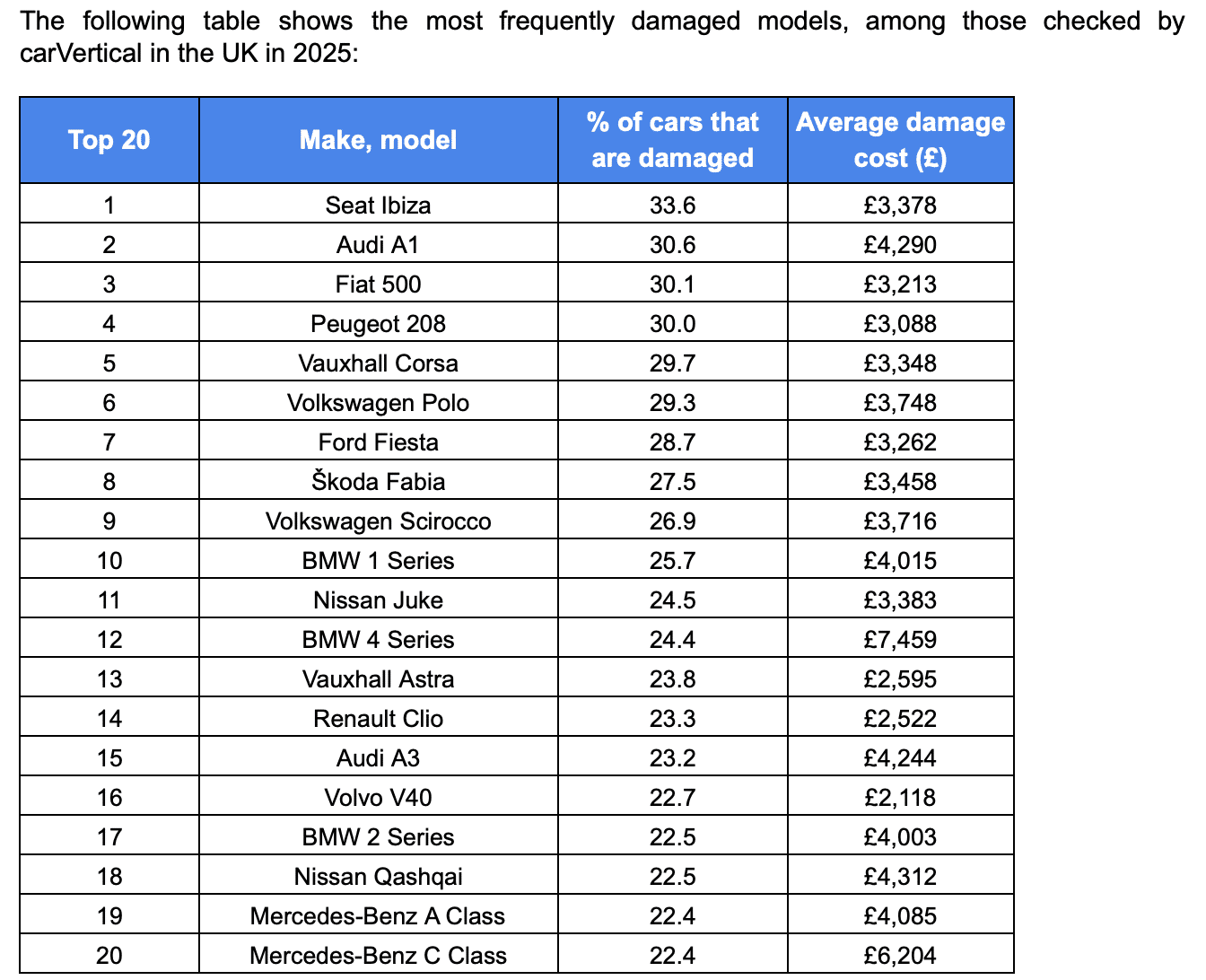
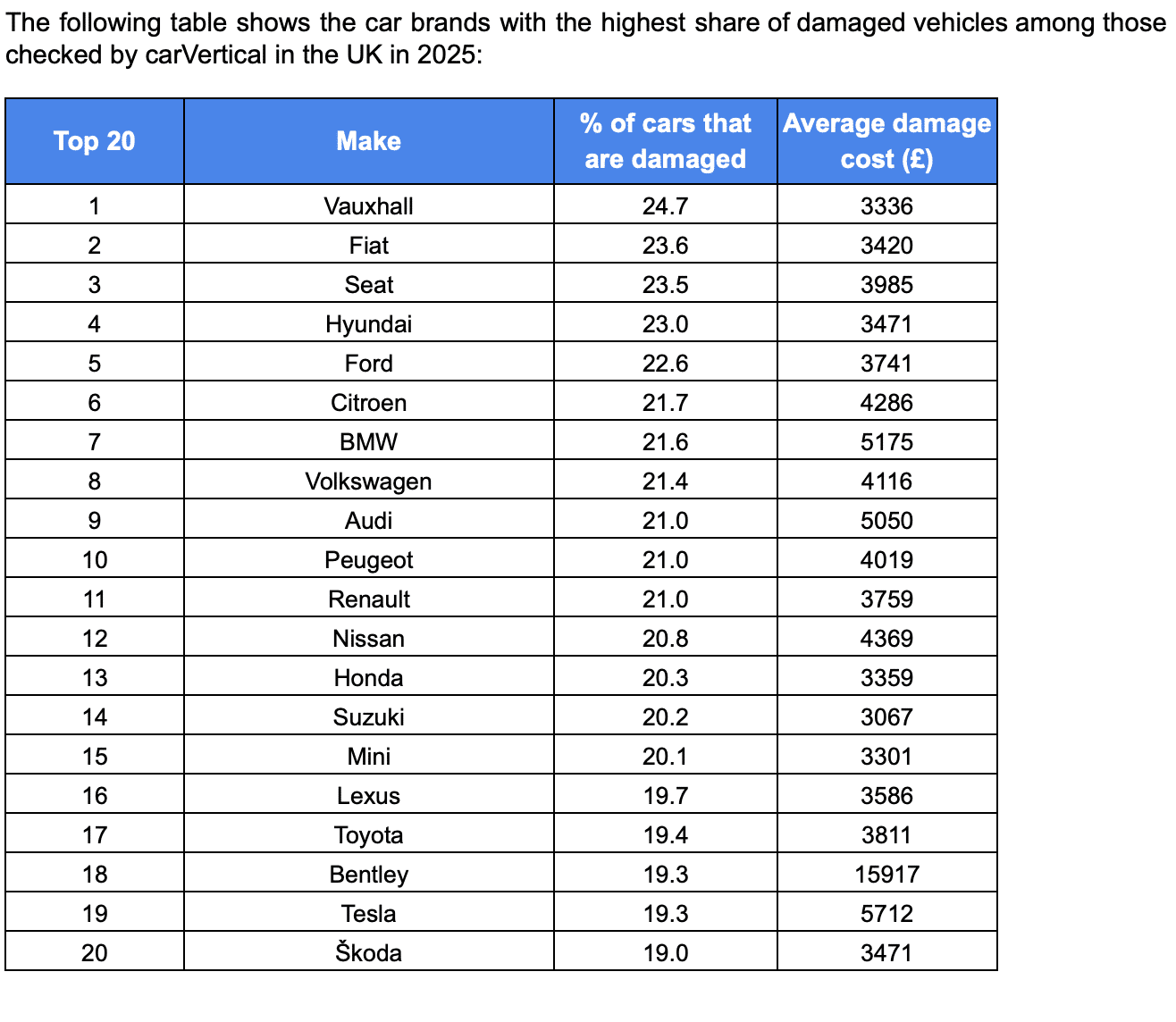
The UK’s most damaged used cars of 2025 have been revealed, with Vauxhall topping the national rankings, according to new figures from vehicle history platform carVertical. 

A quarter of Vauxhalls (24.7%) checked in the UK had at least one recorded damage event, making it the most frequently damaged brand among those analysed.

They were followed by Fiat (23.6%), SEAT (23.5%), Hyundai (23.0%), and Ford (22.6%), suggesting that many of the cars British drivers buy for affordability and everyday practicality are also the ones most likely to show signs of past damage.

Across all vehicles checked by carVertical in the UK, one in five (20.3%) had damage history, while the average value of a single recorded damage event was £4,800.

  • Is your car model on the list below? What is your reaction?
  • What advice do you have for buying a used car?
  •  How do you know there is underlying damage?

Respones asap.
2 responses from the Newspage community

Copy all

Copy

My reaction is that this is exactly why buyers should never confuse “looks fine” with “is fine”. Used cars can be one of the easiest places to make an expensive mistake, because cosmetic repairs can hide bigger structural or mechanical problems underneath. The fact that so many everyday, practical brands are showing recorded damage does not mean they are bad cars, but it does mean buyers need to slow down and do proper checks instead of getting carried away by price alone. My advice is simple: always run a full vehicle history check, inspect the panel gaps, paint consistency, tyres, lights and shut lines, and never skip an independent inspection if something feels off. The biggest warning sign is usually when the price looks too good for the age, mileage and condition. A cheap used car can become a very expensive car if the damage underneath was never properly repaired.
Copy

‘One in five’ isn’t a shocking stat, it’s a reminder that the used car market runs on incomplete information. Damage gets repaired, records get missed, and sellers optimise for speed, not truth.

The practical move is to treat every used car like a mini due diligence exercise: get a full history check, look for mismatched paint or panel gaps, watch for uneven tyre wear, and budget for an independent inspection. If a dealer gets defensive about paperwork, walk away. The cheapest car is often the most expensive after month two.

The bigger issue is data quality. We audit automated decision systems all the time and the pattern is the same: people treat a report as ‘the truth’ when it’s really ‘the truth plus the gaps’. A clean report does not mean no damage, it means no recorded damage. Buyers should ask what would have to be true for this check to miss something, and who benefits from that blind spot.