Copy article

Nearly 70% of Brits would be unhappy if AI was used in dynamic pricing for products

ended 24. March 2026

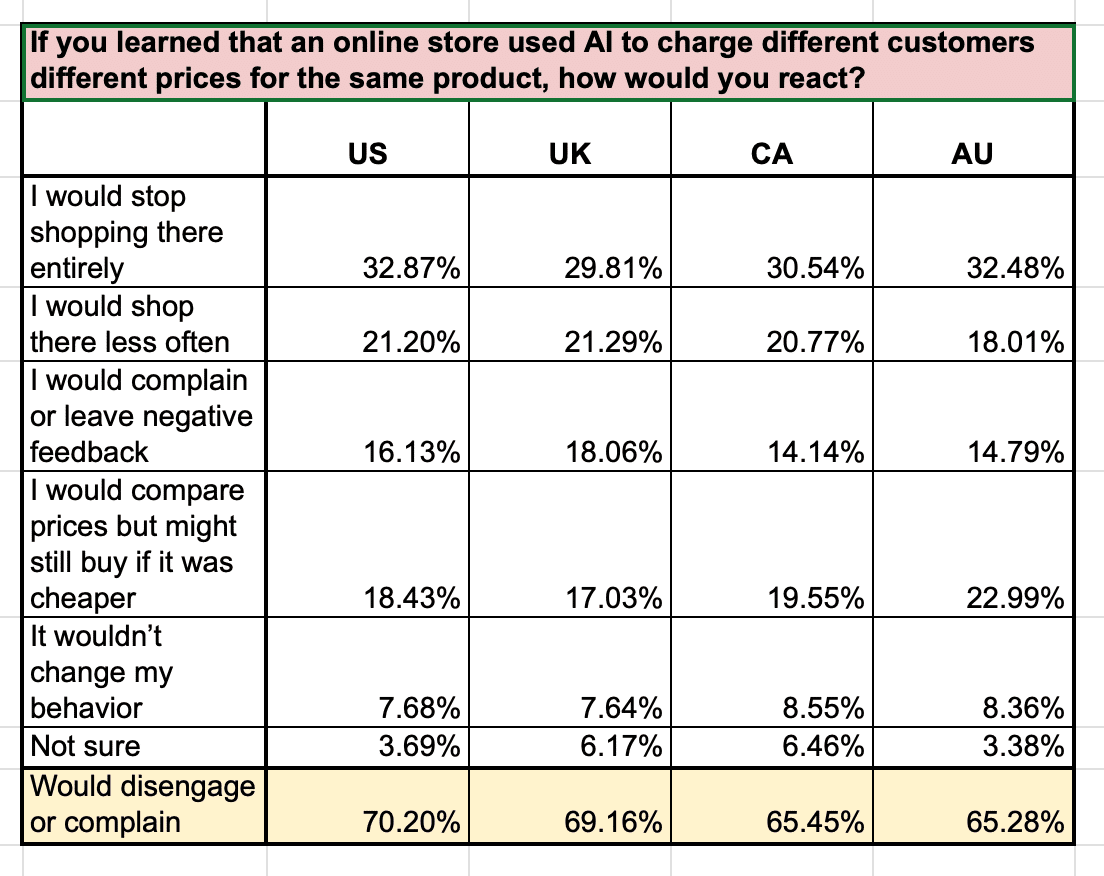
Omnisend research shows nearly 70% of Brits would disengage or complain if they knew AI was being used in dynamic pricing for online products.

  • Is the British public being naive that this is not already being used?
  • How is AI used in dynamic pricing now?
  • How will dynamic pricing be used in the future when AI gets better and better?

Responses by tomorrow.
5 responses from the Newspage community

Copy all

Copy

The tech hype cycle often prioritises rebranding over innovation, and the current AI surge is no exception.

Dynamic and tiered pricing are staples of revenue management for decades, which are now being repackaged under the "AI" banner to capitalize on the zeitgeist.

Strip away the buzzwords, and you find that many "AI-driven" pricing engines are simply legacy algorithms with a modern interface.

While the processing speed may increase, the core strategy remains unchanged: traditional value-based pricing, just rebranded for the 2020s.

Market Rebranding, where "AI" is frequently used as a marketing proxy for standard, rule-based dynamic pricing.

Algorithm vs Intelligence. Much of what is marketed as "learning" is actually pre-set automation.

Dynamic pricing isn't a new frontier; it’s an old tool with a new, expensive name.
Copy

I’m slightly mindblown by how naive this feels. AI-driven dynamic pricing is already everywhere, it’s not new. In travel, retail and hospitality it’s been shaping prices for years. We choose not to automate it fully, using data with human judgement and local insight, but many agencies rely heavily on these tools and AI is already baked in.

The reality is most are using off-the-shelf systems with little understanding beyond seasonal ranges. As AI improves, pricing will become more personalised and less visible. Unless the CMA steps in, it’s hard to see a future where it isn’t behind almost every transaction.
Copy

70% sour on smart pricing shows a silent squeeze, where stealth systems are setting prices shoppers simply can’t see. Dynamic pricing isn’t new. Like a toupee, you only notice it when it’s bad. When done well, it’s completely invisible, and that’s the real risk. AI hasn’t created the problem; it’s just turned up the heat on a long-running game where prices shift based on what companies think you’ll pay, not what something’s worth. Many years ago, I would watch prices for flights, hotels, concert tickets, etc., jump within minutes if I didn't book there and then, mimicking scarcity and demand. I would then watch them drop just by clearing cookies or by switching to an incognito window, proving this isn’t a new concept. AI is just adding jetpacks to it. Without rules forcing transparency, Brits won’t have the chance to stop shopping with an online store or log a complaint because of AI dynamic pricing. They literally won't know it's happening.
Copy

People aren’t naive, they’re just being kept in the dark. Dynamic pricing has existed for years (airlines, hotels, ride hailing). What’s changing is that AI makes it cheap to run it everywhere, all the time, and to personalise it.

That is where the backlash comes from. It stops feeling like “market pricing” and starts feeling like a loyalty penalty. If two neighbours see different prices for the same basket, trust evaporates, even if the maths is technically defensible.

In AI Audits we see the same failure mode: teams optimise for margin and conversion but forget the social contract. If you cannot explain, in plain English, why a customer got that price, you should not be using a black box to set it. The future is not smarter price-gouging. It is transparent pricing rules, hard limits, and a right to opt out of personalisation.
Copy

70% of Brits say they'd walk away from AI dynamic pricing. Most of them have already been dynamically priced and didn't notice.

Airlines and Uber inflate prices for eager buyers. Amazon adjusts prices millions of times a day. Hotel sites show different rates based on your device, location, and how many times you've looked. This isn't coming. It's here.

What's changing is the precision. Early dynamic pricing was crude: supply and demand. AI pricing now factors in individual willingness to pay based on purchase history, postcode, and browsing behaviour. The less you know, the more you pay.

But there's a counterweight building. AI shopping agents that work for the buyer can compare prices, track price histories, spot inflation patterns, and wait for the price dips then strike. The same tech squeezing consumers can be turned around to squeeze back. The question is whether that arms race stays accessible or becomes another premium feature for people who can afford the better AI.