
Copy article

GDP growth could see UK being strongest G7 economy in 2024 "but comes with a twist"

Journalist: John Choong (Head of Markets and Research), Newspage

ended 15. August 2024

The UK economy grew by 0.6% in Q2, as it continues to rebound from a recession in late 2024, and a strong Q1 print earlier this year. As a result, the economy grew 0.9% since this time last year, and the most in seven quarters. However, on a month-on-month basis, the economy stalled in June, flatlining at 0% growth, as compared to 0.4% in May.

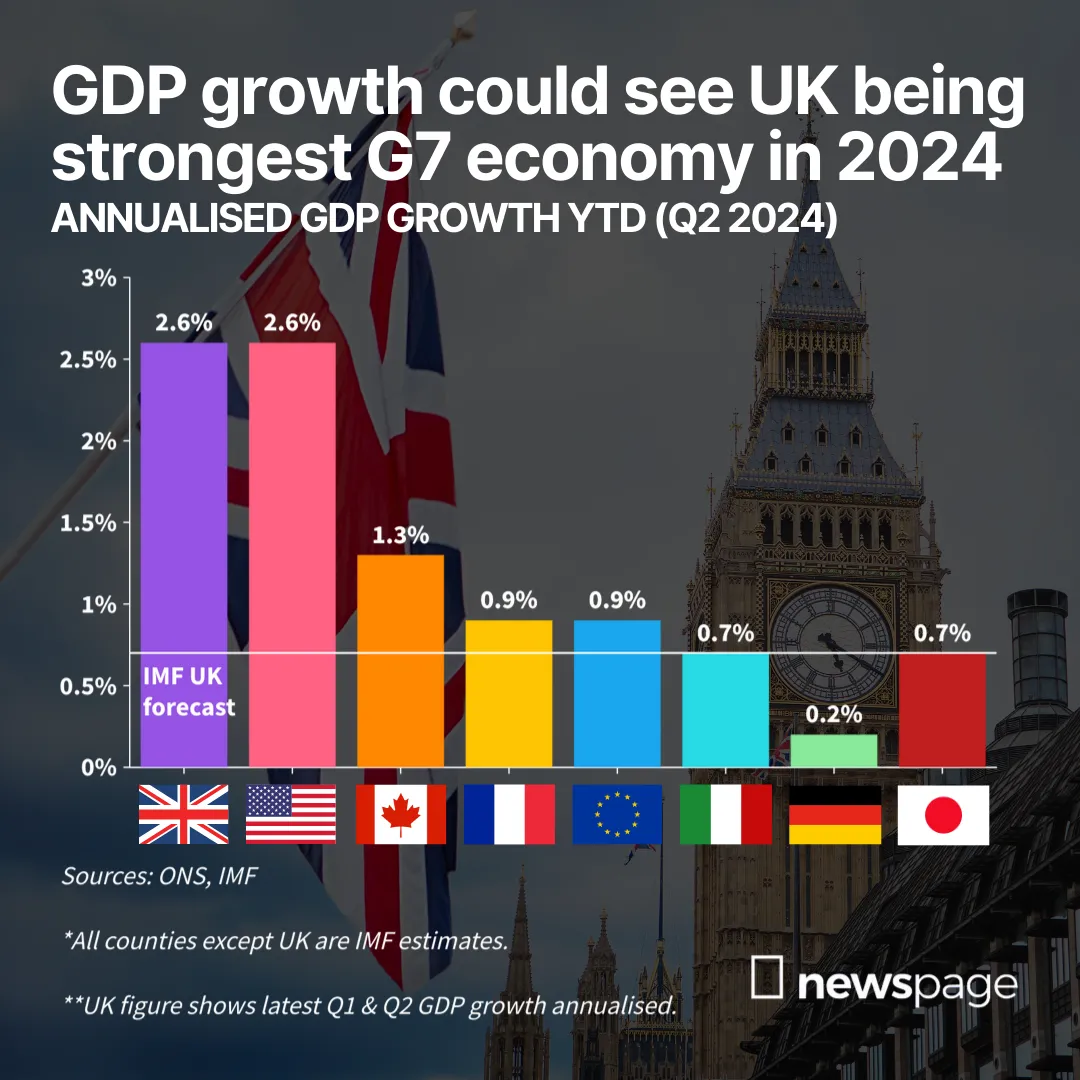
Taking the latest two quarters of GDP growth into account and annualising them would put the UK on top of the charts as the G7’s fastest-growing economy this year (2.6%), even beating the IMF’s forecast for the US economy to grow by 2.6%. Considering that the UK economy had only been forecast to grow by 0.7% this year according to the IMF, it’s safe to say that Britain’s economy is extremely resilient.

The fly in the ointment, however, is that this now gives the Monetary Policy Committee less of an incentive to cut interest rates, as the economy is doing  well in a restrictive rate environment. The Bank of England had forecast GDP growth in Q2 to rise by 0.7% after all, which could mean that committee members are less likely to deviate away from their currently implied rate path, which is to cut rates slowly but surely.

Newspage asked experts for their views, below. Accompanying visual also below.
4 responses from the Newspage community

Copy all

Star Quote
Copy

The British ‘stiff upper lip’ looks to be playing out in our growth numbers. 0.6% growth for the three months to June is excellent news and the UK economy seems to be thriving rather than coping, despite the flat growth in June. This is certainly shaming our European neighbours and even giving our star spangled friends from across the pond something to think about. As with every drama, there is always a second act. While this data and a growing UK economy in the second quarter overall is to be celebrated, this does give the Bank of England and the Monetary Policy Committee a lot of thinking to do and may be more reason to pause and wait before taking more action on interest rates. That could be a blow to borrowers.
Copy

What a rollercoaster. From an economy in tatters and in recession a few months ago, to one of the strongest. Are we rising like a phoenix from the ashes or are our counterparts crumbling? It certainly doesn’t feel like we’re a world-leading economy, though, when we have borrowers struggling to get by.
Copy

The great comeback of the UK economy will without doubt instil even more confidence in the MPC members who voted for a cut that they did the right thing. The calls for more cuts in September will, I feel, fall on deaf ears as they wait out the coming months to see what else the data is telling them. It is an encouraging sign that most data markers are showing a positive shift and we can only hope that this will continue to have a domino effect on the housing market and the rates that lenders ae able to offer.
Copy

The UK economy continues to roar back to life after a harsh winter in 2024 saw the economy enter a recession. This puts Britain on track to be the G7's star pupil, potentially outpacing even the mighty US economy if it can continue to keep up its current pace of growth. This is a testament to the nation's economic resilience in the face of global headwinds and high interest rates. However, this success story comes with a twist. The MPC might now be less inclined to ease up on interest rates. After all, there’s little to no reason to cut interest rates if the economy is already doing so well, with inflation just hovering slightly above its 2% target as well. Nonetheless, this leaves businesses and homeowners in a peculiar position of celebrating growth while having to brace for continued high borrowing costs.