Copy article

‘Fractional’ business boom as new firms increase fivefold since 2022

ended 01. October 2026

‘Fractional’ business boom as new firms increase fivefold since 2022: “It isn't a fad”

NEW firms with 'fractional' in their name have risen fivefold since 2022, Companies House filings show – with experts saying “it isn't a fad, it's a structural shift”.

Fractional executives typically provide senior expertise to several businesses on a part-time or on-demand basis, giving smaller firms access to experienced leadership without the cost of a permanent appointment.

Newspage searched Companies House for companies incorporated since 2022 with 'fractional' in the name and excluded those outside professional services.

They numbered 11 in 2022, 18 in 2023, 25 in 2024 and 55 in 2025.

That is five times as many in three years, and 2025 was more than double 2024.

More were set up in 2025 alone than in all the years before 2022 put together – while in 2026 so far there were 31 set up.

A total of 123 of the 140 set up since 2022 are still trading.

Experts said the model was growing because businesses could access experienced senior leadership when needed without committing to a full-time salary. 

They argued that fractional specialists could deliver strategic direction, challenge assumptions and take responsibility for putting decisions into practice.

They added that AI could accelerate research, analysis and routine work but could not replace human judgement, trust or accountability. 

The strongest approach, they said, was to combine AI’s speed with the experience and interpersonal skills of a fractional expert.

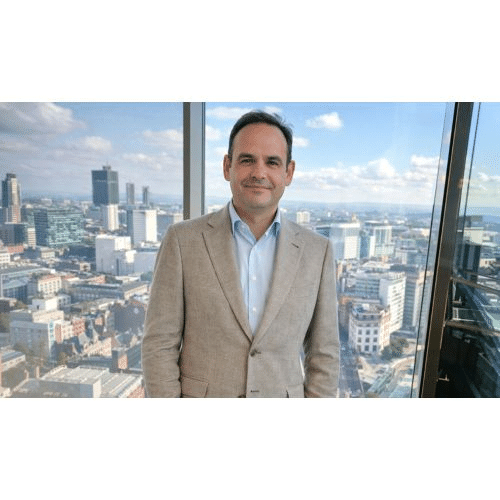
Tim Day, Founder at FractionALL Services, said fractional business is booming because AI can't replace a human running the essentials of your business.

He added: "The UK has some catching up to the US early adoption of fractional experts. This redistribution of sourcing a more flexible, on demand resource in an ever faster changing commercial world is compelling for all businesses. Cost benefit is well documented but that's only half the story.

"Concentrated effort and removing waste improves efficiency and productivity whilst retaining the right ownership and accountability without the waste. Value for money, speed of impact, tapping into experience and being a strategic navigator makes fractional a logical choice.

"AI is an accelerator of change management now. It can't replace gut feel or experience. Calculating the next word of the sentences it writes doesn't pick up on social cues, culture or any other people related necessities in change management. Without a human in the loop at the start and for impact assessment it becomes misguided. Anyone relying on AI to fully run their business I would have serious concerns for."

Kelly Smallcombe, Fractional Chief People Officer at Meliorem HR Consultancy, said the judgement of a human is valuable.

She added: "Fractional is booming because businesses have separated judgement from headcount. You don't need a full-time HR hire, you need senior thinking at the moments that matter, then nothing in between. AI can't replace that judgement.

"You can prompt a model for policy wording, but it can't prompt its way into the confidential conversation, the off-the-record disclosure, or the resignation nobody's filed yet. Good HR runs on things people only tell a trusted human, never a chat window.

"A fractional CPO brings pattern recognition built from decades of real, discreet conversations. AI is a great tool, I use it a lot for some tasks, but that isn't what you're paying a fractional person for. Let AI do the graft and the human do the craft."

Tony Sanchez, Founder at Bridging Loan Directory, said there are many ways that employing a fractional specialist appeals.

He added: "For a small business, the appeal of a fractional specialist is access to experience at the point you need it, without committing to a full-time salary. But I would want a clear problem for that person to solve, rather than hiring a 'fractional CMO' because the title is fashionable.

"I use AI to test ideas, analyse information and speed up drafting. It can be extremely useful, but it works with the context I give it and can sound certain when it has missed something important. A good finance or marketing specialist should challenge my assumptions, understand the business beyond a prompt and take responsibility for their advice.

"The strongest arrangement would probably use both: AI to make the routine work faster, and an experienced person to exercise judgement and help make the decisions. The test for a small firm is whether the specialist produces a result that justifies the cost."

Tony Redondo, Founder at Newquay-based Cosmos Currency Exchange, said businesses are choosing fractional because AI can't replace it.

He added: "Fractional leadership isn't a fad; it's a structural shift in how businesses hire senior talent. Owners want enterprise-grade expertise without the payroll, so they're buying access to strategy and battle-tested pattern recognition on demand.

"The model's long been standard in North America and is now taking off across the UK, flexing from a few hours a month to several days a week depending on what the business actually needs. Not to be confused with a non-exec role. NEDs sit above the business providing governance and oversight; fractionals get their hands dirty and drive execution from inside it.

“That logic extends into specialist territory too: fractional currency brokers, for instance, give firms with £1m+ in FX exposure boardroom-level strategy without carrying a full-time treasurer's salary. And no, AI can't replace any of this. It can crunch numbers fast, but it can't manage stakeholders, negotiate counterparty risk, or carry the can when real capital's on the line.”

ENDS

……….

Here are the original questions we put to Newspages experts.

Fractional CFOs, CMOs, HRs, XYZs are seem to be cropping up everywhere at present. If you're one, what‘s driving the growth spurt?

Why is ‘fractional’ firing on all cylinders?

And business owners, have you hired a fractional CFO, CMO, etc? If you have, how valuable was/is it?

Also keen to know if business owners see Claude as an infinitely cheaper CF-Anything who can see stuff with a clarity that no human can? Or perhaps that’s not true? 

How does a fractional expert do what AI couldn't? 
8 responses from the Newspage community

Copy all

Copy

For a small business, the appeal of a fractional specialist is access to experience at the point you need it, without committing to a full-time salary. But I would want a clear problem for that person to solve, rather than hiring a “fractional CMO” because the title is fashionable.

I use AI to test ideas, analyse information and speed up drafting. It can be extremely useful, but it works with the context I give it and can sound certain when it has missed something important. A good finance or marketing specialist should challenge my assumptions, understand the business beyond a prompt and take responsibility for their advice.

The strongest arrangement would probably use both: AI to make the routine work faster, and an experienced person to exercise judgement and help make the decisions. The test for a small firm is whether the specialist produces a result that justifies the cost.
Copy

Fractional leadership isn't a fad; it's a structural shift in how businesses hire senior talent. Owners want enterprise-grade expertise without the payroll, so they're buying access to strategy and battle-tested pattern recognition on demand. The model's long been standard in North America and is now taking off across the UK, flexing from a few hours a month to several days a week depending on what the business actually needs. Not to be confused with a non-exec role. NEDs sit above the business providing governance and oversight; fractionals get their hands dirty and drive execution from inside it. That logic extends into specialist territory too: fractional currency brokers, for instance, give firms with £1m+ in FX exposure boardroom-level strategy without carrying a full-time treasurer's salary. And no, AI can't replace any of this. It can crunch numbers fast, but it can't manage stakeholders, negotiate counterparty risk, or carry the can when real capitals on the line.
Copy

Fractional boom? I've been fractional for 11 years. Nobody gave me the badge. Back then it was called "our HR lady who comes in on Tuesdays." So let's not pretend this is a revolution. It's a rebrand. Small firms have always bought senior help by the day because they couldn't afford it by the year. Count 55 companies with "fractional" in the name and you've counted a trend in LinkedIn job titles, not in how business works. The job is old. The title is new. What has changed is cost. Employing a full-time senior person has got so expensive that owners are now proud to rent one instead. Fair enough. I'd do the same. Can Claude be your CF-Anything? I use it every day and it's brilliant. It'll draft your disciplinary letter in seconds. It won't be sitting next to you at the tribunal. When it goes wrong, AI doesn't answer the phone at 7am. I do. Hire the person who carries the can. Let the AI carry the paperwork.
Copy

Fractional talent is booming because small businesses have realised they do not need a £150,000 full-time executive to access £150,000-level thinking.

I completely understand the appeal. A growing firm may need a senior finance, marketing or people brain for one day a week, not five.

AI makes that model even stronger, not weaker. Claude or ChatGPT can research, analyse, draft and challenge ideas at extraordinary speed. I use AI heavily myself. But AI can produce an answer; it cannot own the consequence.

It cannot sit opposite an employee, negotiate with a supplier, understand the politics inside a business or take responsibility when a decision goes wrong.

The future is not fractional versus AI. It is brilliant fractional people using AI to do ten hours of groundwork in one.

Small businesses are no longer buying headcount. They are buying judgement exactly when they need it.
Copy

Fractional is booming because businesses have separated judgement from headcount. You don't need a full-time HR hire, you need senior thinking at the moments that matter, then nothing in between. AI can't replace that judgement. You can prompt a model for policy wording, but it can't prompt its way into the confidential conversation, the off-the-record disclosure, or the resignation nobody's filed yet. Good HR runs on things people only tell a trusted human, never a chat window. A fractional CPO brings pattern recognition built from decades of real, discreet conversations. AI is a great tool, I use it a lot for some tasks, but that isn't what you're paying a Fractional person for. Let AI do the graft and the human do the craft.
Copy

The UK has some catching up to the US early adoption of fractional experts. This redistribution of sourcing a more flexible, on demand resource in an ever faster changing commercial world is compelling for all businesses. Cost benefit is well documented but that's only half the story. Concentrated effort and removing waste improves efficiency and productivity whilst retaining the right ownership and accountability without the waste. Value for money, speed of impact, tapping into experience and being a strategic navigator makes fractional a logical choice.
AI is an accelerator of change management now. It can't replace gut feel or experience. Calculating the next word of the sentences it writes doesn't pick up on social cues, culture or any other people related necessities in change management. Without a human in the loop at the start and for impact assessment it becomes misguided. Anyone relying on AI to fully run their business i would have serious concerns for.
Copy

After 30 years in marketing, the FCMO model feels like a natural progression for me. I'm in my late 40s, I don't need to compete with a 25 year old social specialist who lives and breathes the latest platforms, or someone spending every day exploring new AI tools. I'd rather have them on the team.

My value is knowing whether we need those things in the first place, what they need to achieve, how they connect to sales and the wider business, and whether we're spending money in the right places.

I use AI extensively and it can make me more productive, but access to information isn't the same as experience or judgement.

Yes, AI can analyse numbers and suggest what to do but it can't sit in a management meeting, understand why things aren't happening, get people pulling in the same direction and take responsibility.

AI enablement simply means that businesses need less of our time, but certainly not less of our experience.
Copy

iot domus ltd
Federico Fiorentini, Founder, FractionalNexus

The fractional growth spurt isn't really about cost-cutting — it's about companies needing judgment that can't be built in-house fast enough. A permanent hire takes months to ramp and years to make the expensive mistakes that actually teach them something. A fractional executive brings those mistakes pre-paid, from other businesses, on day one.

On Claude or any AI as a "cheaper CFO": AI is excellent at producing the answer once the question is well-formed. What it can't do is know when to stop trusting its own answer — that judgment only gets built by living through a decision that looked right and wasn't. A fractional CFO isn't valuable because they're faster than AI at the numbers; they're valuable because they've already been burned by the version of this problem that hasn't happened to your business yet.

The real skill AI hasn't replicated is knowing which question to ask before the model even runs — and that comes from pattern recog