Areas with higher crime rates see higher house price growth
TOWNS and cities with higher crime rates are delivering higher house price growth, new research reveals, with house prices in some of the UK’s most crime-affected towns and cities rising at more than twice the rate of the safest areas.
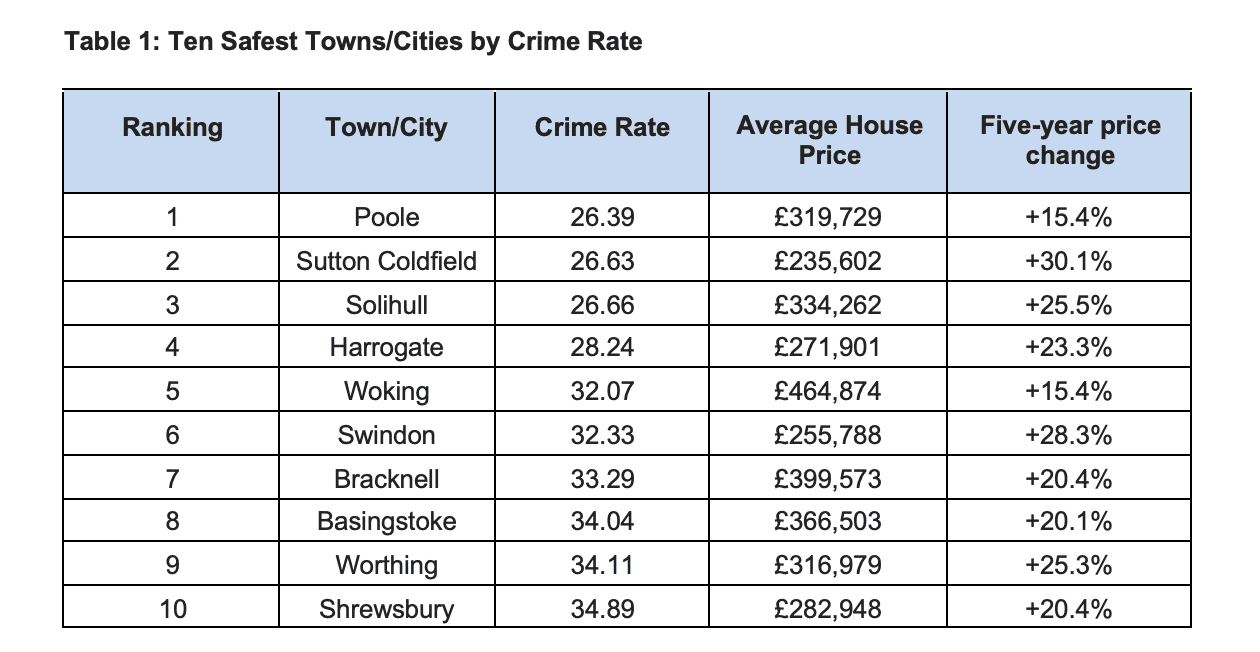
Homebuying platform, OneDome, analysed crime and house price data for 75 major towns and cities across the UK, comparing the safest and least safe areas in terms of reported crimes per 1,000 residents.
An overall crime rate score for each location was calculated using weighted averages across three key crime types — violent crimes, property and fraud, and public order offences.
The data revealed that house prices in many higher crime areas have risen significantly faster over the past five years than those in safer towns, suggesting people are prioritising affordability over personal safety.
In Poole, Dorset – officially the safest place in the country by crime rate, with just 26.39 crimes per 1,000 residents – average house prices have risen by 15.4% over the past five years.
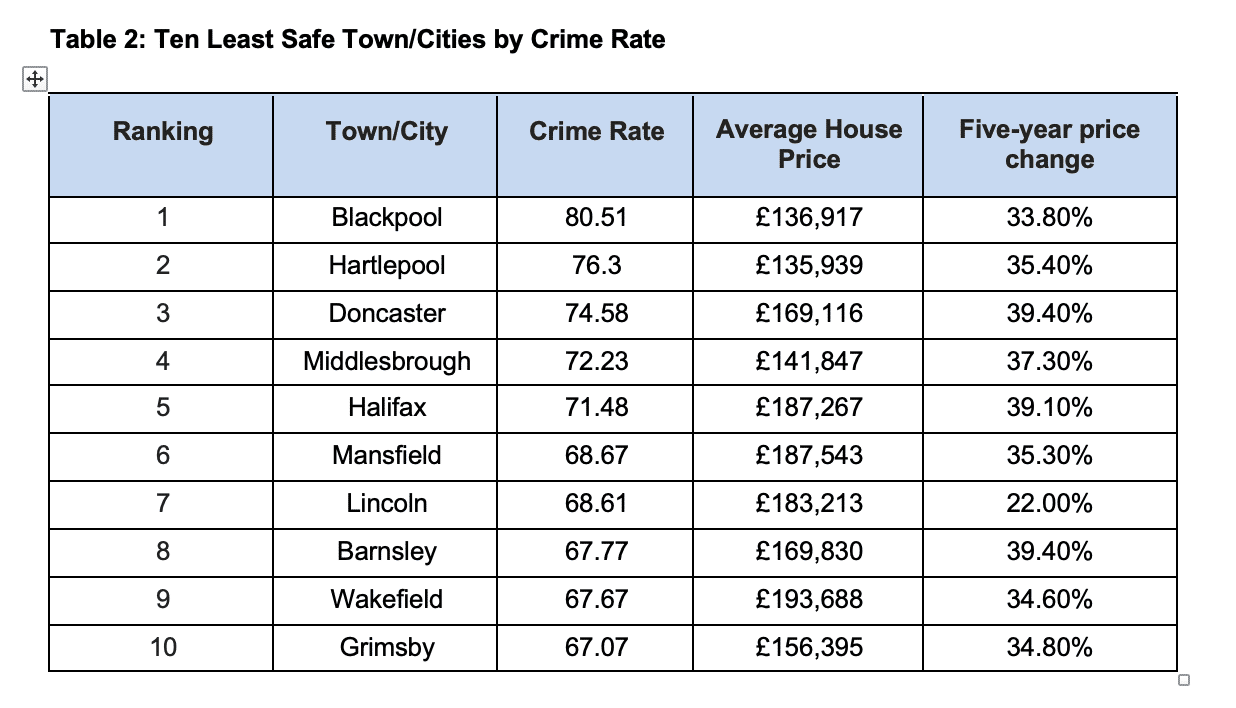
In contrast, house prices in Blackpool, where the crime rate is 80.51 per 1,000, have increased by 33.8% during the same period — more than double Poole’s growth in percentage terms.
The research found that the average house price in the 20 towns and cities with the highest crime rates has increased by 34% over the past five years. In comparison, average house prices have increased by 23.2% across the 20 towns and cities with the lowest crime rates.
Babek Ismayil, Founder at OneDome, said: "Affordability, or rather the lack of it, is driving prices up disproportionately in towns and cities where crime rates are higher. With mortgage rates still high, house prices in sought-after areas often out of reach and a cost-of-living crisis continuing to squeeze household budgets, people have no choice but to move to towns and cities where they can get that first step on the ladder. This is a trend being facilitated by the ongoing remote or hybrid working culture, where people no longer need to be in the office every day of the week, if at all, giving them the flexibility lo look further afield.
“But it seems the short-term pain of affordability can result in long-term gain as people struggling with affordability and priced out of their ideal locations move en masse to less desirable areas, which drives prices in those areas up higher than the average. The problem for many buyers — affordability — may well prove the cure as equity in their homes improves at a faster rate.”
Katy Eatenton, Mortgage & Protection Specialist at Lifetime Wealth Management, said the data was not surprising and reflects a trend that has always happened: “It's simply the process of gentrification and is taking place at a street, area and even town and city level. People, usually first-time buyers with limited borrowing capacity, often have to buy in less desirable areas and, as more follow them, those areas, over time, become more desirable.
"Though crime rates and 'risk' may be higher initially, there is also a real opportunity to benefit from higher house price growth, as this data shows. Of course, some areas can take much longer than others to gentrify. Sometimes the process can happen in a few years, sometimes a decade.”
David Belle, Trader at Fink Money, agreed: “This is commonly known as gentrification, and it's largely a good thing. People move to less affluent areas because they can't afford to buy where they would like to and, eventually, end up displacing the crime-doers. Or they simply put up with it. If you have new people entering an area in big numbers, the area generally improves because the standard becomes higher. The broken window theory is very much true, but if there are fewer broken windows over time, things pick up socially and house prices tend to rise.”
Kate Allen, Owner at Finest Stays, said “it’s a worrying sign of the times when buyers feel forced to compromise on safety just to get on the ladder; a reflection of broken affordability, not preference. People aren’t flocking to high-crime areas out of choice, but out of blind desperation to follow the price points. The upside? This shift might breathe new life into neglected communities, triggering investment, social regeneration and, hopefully, a recalibration of priorities in UK housing policy”.
Emma Jones, Managing Director at Whenthebanksaysno.co.uk, said the data underlines a shift in buyer psychology: "Affordability outweighing safety signals a fundamental shift in buyer psychology and the broader housing landscape. The data shows that people are increasingly prioritising access to the property ladder, even if it means moving to areas with higher crime rates. This isn’t a matter of ignoring risk, it’s a reflection of limited choice in an increasingly unaffordable market. Buyers are having to take risk to get onto that first rung of the ladder.
“But this trend also tells a deeper story: as more buyers move into these areas, they bring stability, community investment, and economic momentum that can lead to real, measurable change. When homeownership rises, local economies improve, civic engagement increases and, over time, crime rates can fall. What’s crucial is that this organic regeneration is supported by targeted local investment, ensuring that new homeowners aren’t just moving into high-crime areas, but those with better services, schools, policing and public infrastructure.”
Justin Moy, Managing Director at EHF Mortgages, said the data may be being impacted by landlord activities: “For many landlords, the opportunity to maximise returns from buy-to-let property comes from those places in the least safe locations, as property is cheaper and the rent is proportionally better, so this investment model may be feeding into some of the data from OneDome."