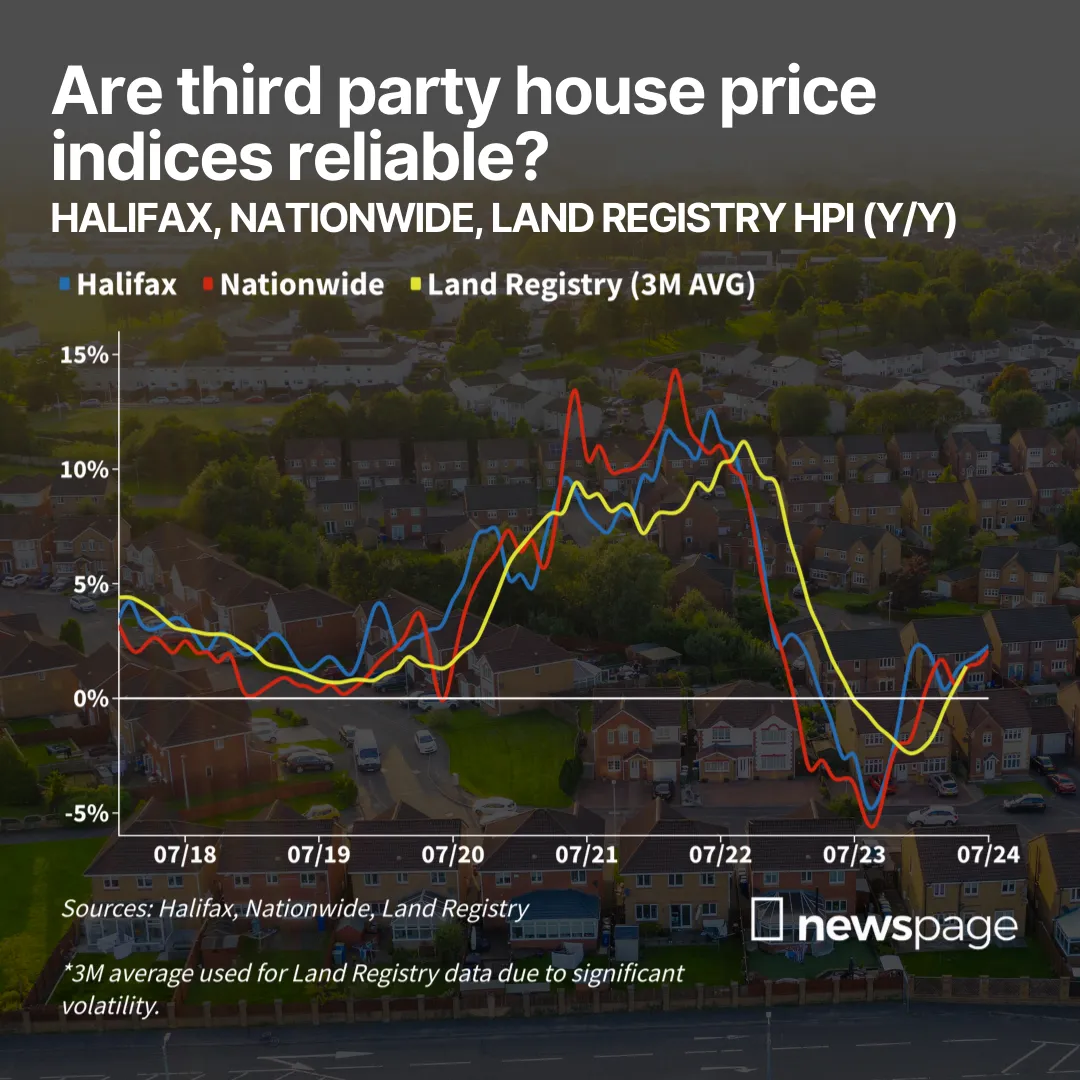
Third party house price indices can be "ham-fisted in how simplistic the valuations are"
House prices are on their way back up, or are they? The most recent Nationwide and Halifax indices showed house price growth finally breaching the stubborn 1% threshold in July. Prices grew by 2.1% and 2.3% on an annualised basis, respectively. This comes on the back of a post-election boost in demand, as well as a slow but albeit improving price-to-earnings ratio, as wage growth continues to outstrip house price growth.
Critics, however, remain sceptical of the reliability of third-party house price indices. Many claim that the nation’s biggest mortgage providers have an interest in "artificially" raising the average house price. Critics claim that these organisations are stoking fears of missing out, in order to instigate potential buyers to buy into the market before house prices rise further.
Their main argument stems from the latest Rightmove data, which showed asking prices beginning to decline. This suggests a disconnect between the house prices reported by the mortgage lenders and the market. The claim being made here is that falling asking prices indicate cooling demand. And with housing supply also shooting up as the number of available listings rise, a disconnect could be at play.
Three questions for Newspagers:
- How reliable are the Nationwide and Halifax house price indices compared to other market indicators?
- What factors might explain the discrepancy between rising house prices reported by Nationwide and Halifax and declining asking prices by Rightmove? Are there regional variations in house price trends that might not be captured by national indices?
- What other economic indicators should we be considering alongside house price indices to get a more comprehensive view of the housing market's direction?