
Copy article

Wage growth cools but still behind inflation curve

Journalist: John Choong (Head of Markets and Research), Newspage

ended 13. August 2024

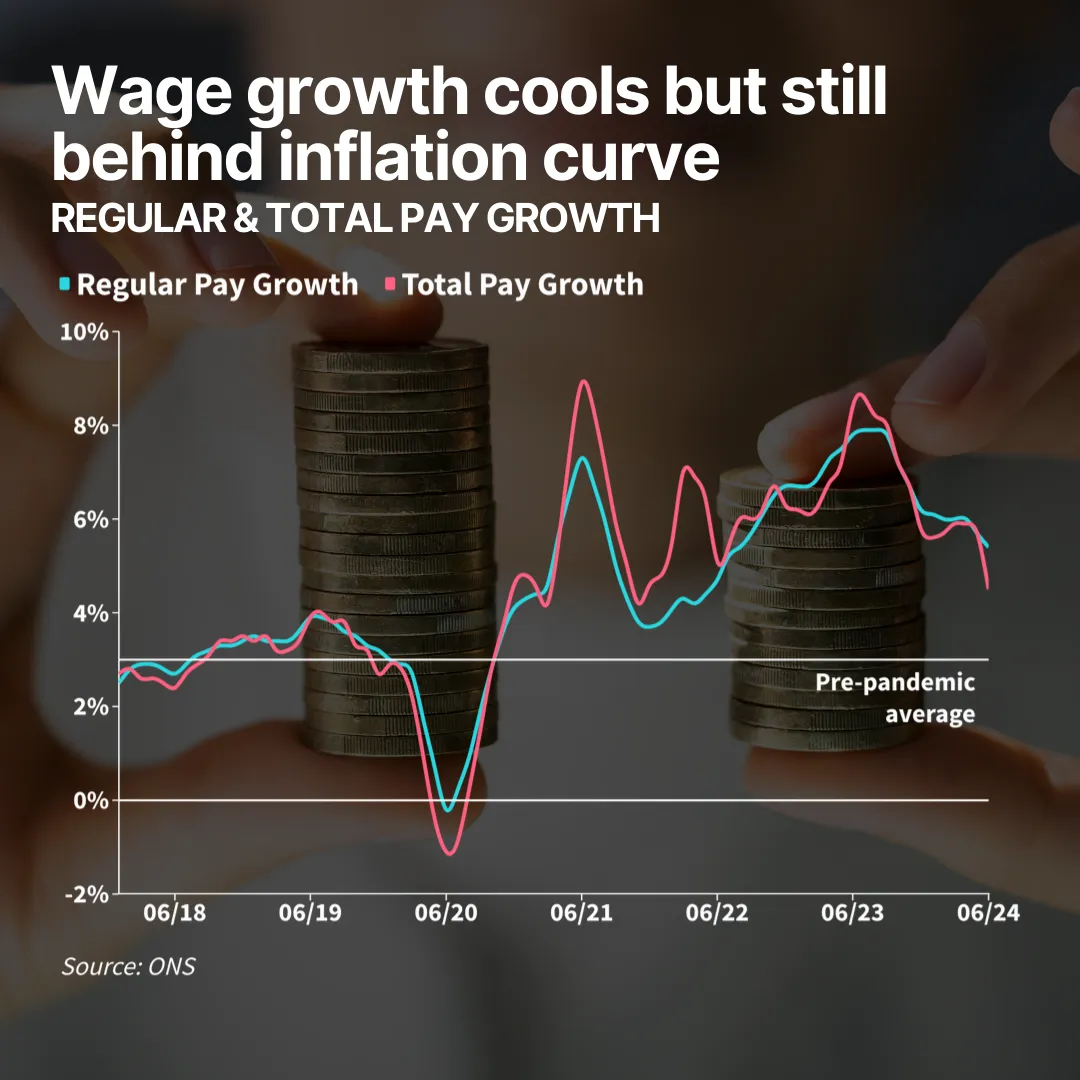
Wage growth cooled at its fastest pace since 2021. Total pay growth witnessed its slowest growth in almost 3 years, to 4.5% from 5.7%. Be that as it may, however, wage growth is still a long way away from levels that are consistent with 2% headline inflation. The less volatile regular earnings growth metric only slowed to 5.4% in the 3 months to June from 5.8% in May, above the Bank of England’s forecast of 5.2%, and significantly short of consensus of 4.6%.

The cooling of wage growth comes in line with the PAYE flash estimates disclosed in last month’s labour report, as wages were forecasted to drop on a month-on-month basis. That said, the labour market isn’t cooling as much as markets had been anticipating. The unemployment rate actually dropped to 4.2% from 4.4%, while the rate of decline in the number of vacancies slowed to 0.5% on a month-on-month basis, below the 12-month average of 1.3% per month.

Nonetheless, considering the strong relationship between wage growth and services inflation historically, this still bodes well for the latter. This is especially true given that services inflation is a key metric the Monetary Policy Committee (MPC) scrutinises when deciding whether to cut rates.

A list of responses from industry experts can be found below.
2 responses from the Newspage community

Copy all

Star Quote
Copy

July’s cooling wage growth numbers may look encouraging, but this was down to the lapping of one-time pay settlements given to the healthcare sector last year. The fact that median pay growth came in higher than what the ONS had projected last month (3.8% vs 3.6%) may see the odds of a September rate cut drop from the 35% priced in as of yesterday.

The fact remains that regular pay growth is still a long way away from the 3-4% in 2019 – a level that is consistent with 2% inflation. Lower energy prices were the main catalysts that helped to push inflation back down to 2%. But with that tailwind having dissipated, a slower decline in services inflation puts any further rate cuts in jeopardy.

On that basis, we expect the outlook for services inflation to remain murky. Ultimately, the final decision for a September rate cut will be solely dependent on the CPI print tomorrow, with all eyes on the services category.
Star Quote
Copy

The cooling of wage growth aligns with expectations and supports the potential for a continued rate-cutting cycle. However, the unexpected drop in unemployment adds complexity to the economic outlook. With another round of employment data and two more inflation reports due before the next base rate decision, it’s still too early to predict further rate cuts in September with confidence.