
Copy article

US wholesale inflation spike could pressure the pound via trade channels

ended 17. August 2025

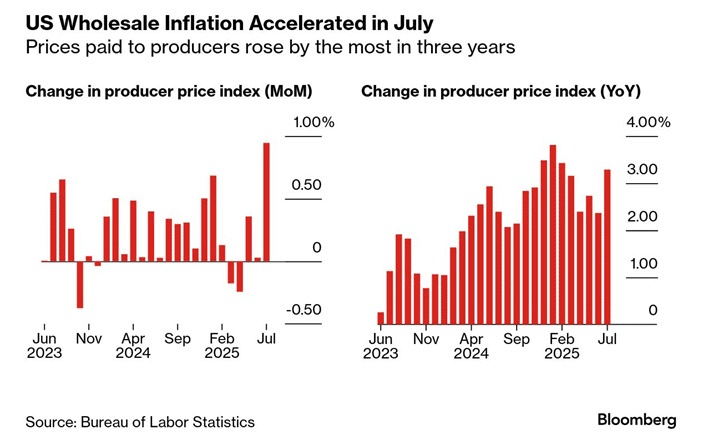
Fresh US government data shows wholesale inflation accelerating in July at the fastest pace in three years, with tariff-related import costs a key driver. The Producer Price Index (PPI) rose 0.9% month-on-month – the largest increase since June 2022 – and 3.3% year-on-year, suggesting American firms are passing higher costs on to customers despite weaker demand earlier this year. Key Questions for UK Analysts and Markets: 1. Will UK exporters benefit from a stronger dollar, or will global demand headwinds outweigh currency advantages? 2. How might the Bank of England balance the risk of imported inflation from a weaker pound against the domestic slowdown?
3 responses from the Newspage community

Copy all

Copy

Unlike the Bank of England, the Fed has a dual mandate. Not only are they responsible for keeping inflation on track, but also have to take into considerations restaints on the economy. This gives Jerome Powell an event bigger headache than Trump swarking in his ear. It probably means the dollar stays higher for longer, and this will affect the exchange rate against sterling. Headwinds from the US are those of a Trump making, and all international partners face the same. Rates should continue on their downward trajectory, with the economy in the UK set to slow further as trade across the Atlanic will slow. This could bring us closer with our European partners, which mike kick start our flat lining economy, if there is the policitical will.
Copy

This surge in US wholesale prices reinforces the view that the full inflationary impact of tariffs has yet to fully radiate through the economy and complicates the Fed’s path, but doesn’t necessarily preclude a US interest rate cut next month. With core consumer inflation also running well above the Fed’s 2% target, the central bank faces a growing dilemma. Ease to support growth or hold firm to contain price pressures. The Pound Sterling had climbed to a 1-month high versus several major peers this week, and with the Fed more likely than the BoE to cut rates, the Pound should largely hold on to recent gains, complicating life further for UK exporters. The BoE faces a similar dilemma, adding weight to their slow and gradual path on UK interest rates.
Copy

A 0.9 percent jump in one month on the US Producer Price Index should make the Bank of England wince, but its gaze remains fixed on domestic inflation. This American phenomenon is a textbook case of cost push for everyone, fuelled largely by Trump's tariffs and supply strain. For British importers this essentially means a rising dollar and a shrinking pound. When you pay for your materials in dollars, and sell into cautious markets to get paid in pounds, there will be many a board meetings scheduled next week to discuss this 'crisis'.

Bailey now faces the impossible brief of managing imported inflation without choking out what little domestic demand we have left in this country. Raise rates to defend the currency and you crush borrowing. Sit on your hands and you let the pound drift while American prices climb up your supply chain.

I do not envy the Bank of England, and I doubt even those sitting on the MPC envy their jobs at the moment!