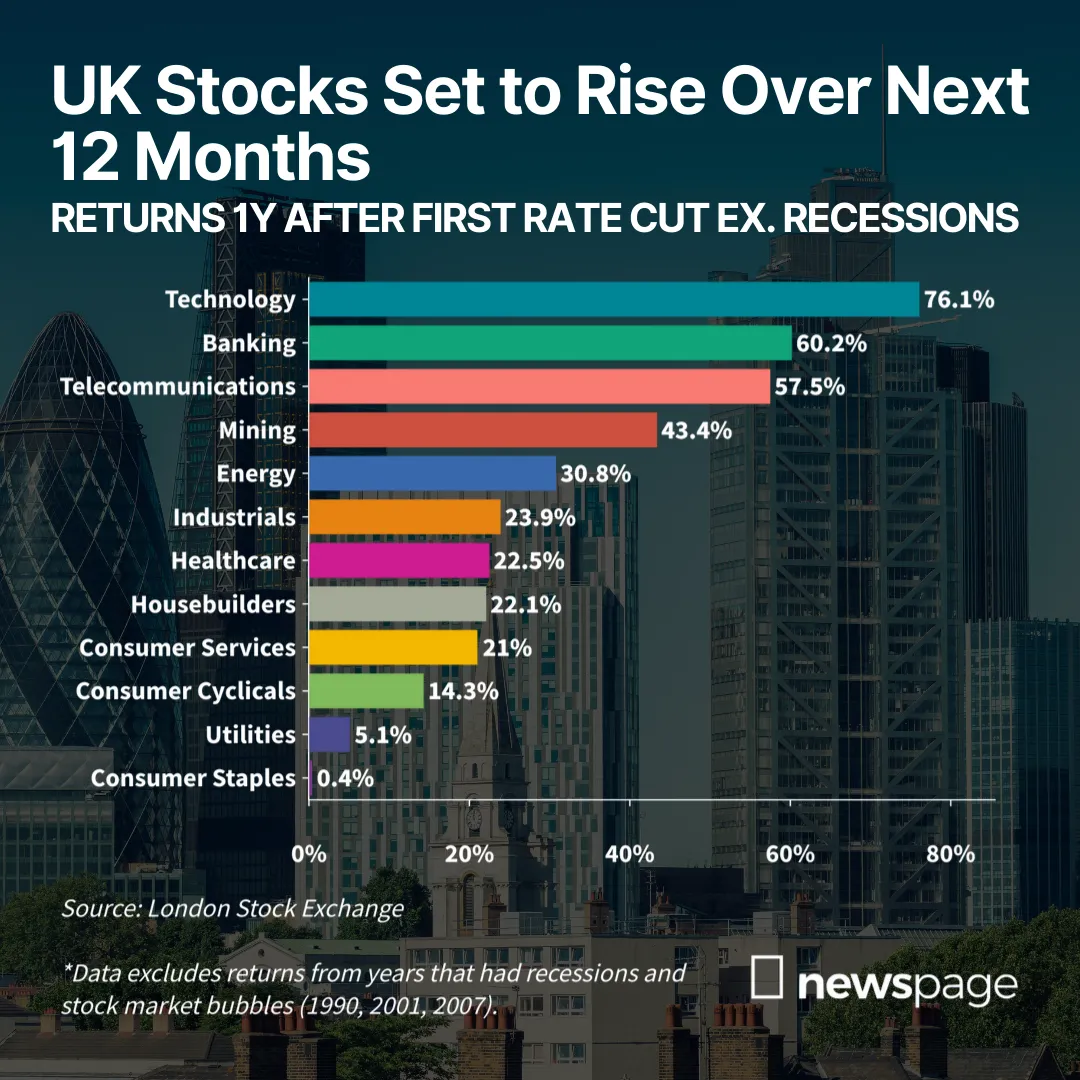
UK stocks gain an average 21.9% in the 12 months following a first base rate cut
Investors in UK stocks may be set for a windfall over the next 12 months if history is any indicator. Research done by Newspage shows that UK equities tend to gain a median average of 21.9% in the 12 months following the first rate cut.
The Bank of England usually cuts interest rates to avoid a recession (if one isn’t already in motion) and/or to stimulate economic growth. Since 1990, there have been five rate-cutting cycles that have cumulated in 1% worth of cuts, or more. These were in 1990, 1996, 1998, 2001, and 2007. Excluding the 2008 financial crisis, median average returns across the other four periods were positive.
With the UK now on track to be the strongest-performing G7 economy in 2024 with an annualised GDP growth rate of 2.6%, the odds of FTSE shares outperforming over the next 12 months are even greater. Newspage found that excluding years that had a recession or financial bubble “popping”, UK stocks produced a median average return of 22.9%, a year after the first rate cut was instigated, with all sectors posting positive returns.
Unsurprisingly, tech stocks are the biggest winners, with tech names 76.1% higher on average, in the year after the first rate cut. This is followed by banks, which yield an average return of 60.2% due to more favourable borrowing conditions, and then telecoms, with an average return of 57.5%.
On the flip side, however, there are several sectors that underperform. Consumer staples, for one, only scrape by with an average return of 0.4%, with utilities not doing much better either, with an average return of 5.1%. Meanwhile, consumer cyclical stocks post an average 14.3% return, but that still pales in comparison to the average return of the rest of the other sectors.
Newspage asked analysts, economists, and experts for their views of what this means for the outlook of the FTSE 100, the reasons behind their calls, and the reliability of historical trends.