
Copy article

Brokers warn borrowers to beware of the tracker: "The gap between comparable fixed and tracker deals is making it difficult to justify taking a tracker at the moment"

Journalist: Justin Moy, Contributing Editor

ended 02. August 2024

With the Bank of England cutting rates yesterday, many borrowers could be tempted to opt for a tracker rate in anticipation of further cuts and, in theory, further savings. But one broker has warned that “the gap between comparable fixed and tracker deals is making it difficult to justify taking a tracker at the moment".

Another said: “The time to consider a tracker was really before rates started to drop. Now that rates are falling they do not seem good value in general, unless they meet a flexibility requirement or other pressing priority of the borrower.”

This is partly because, in recent weeks, a number of lenders have been increasing their tracker rates, perhaps pre-empting this week’s rate decision and in an attempt to attract borrowers to their fixed deals instead.

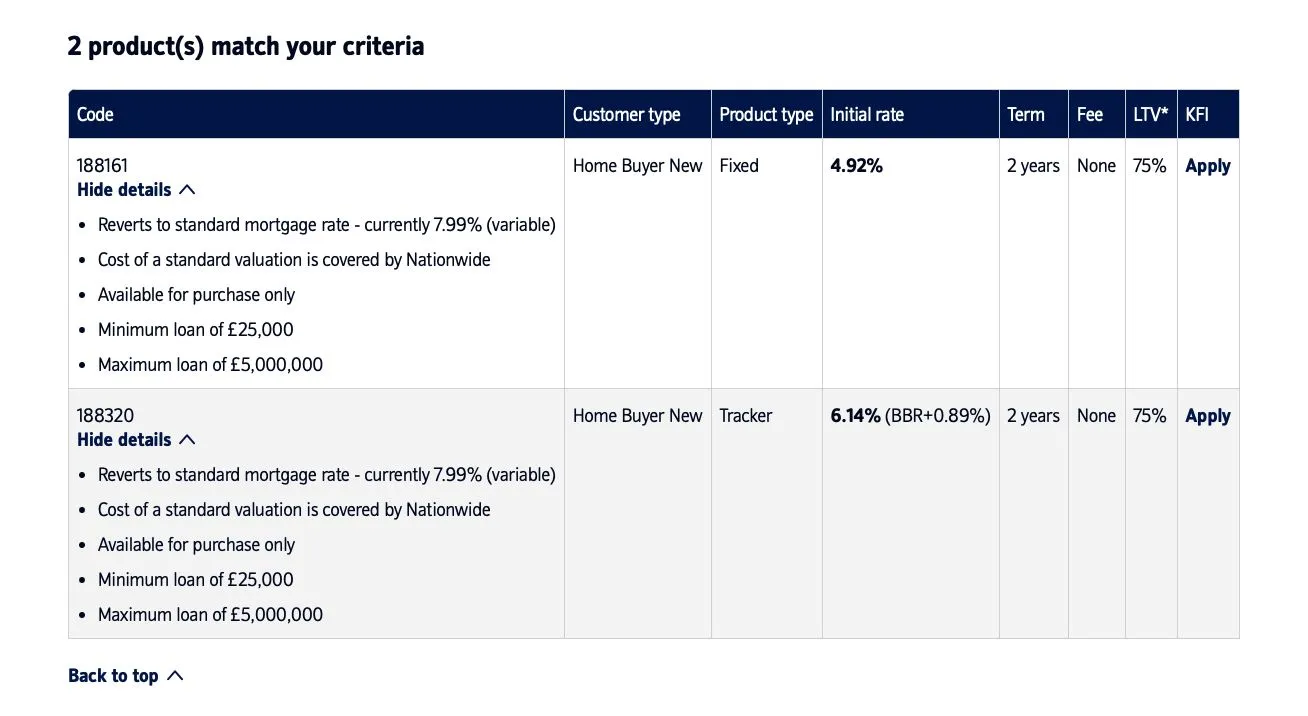
As a working example, here’s a Nationwide 2-year deal comparison (rates correct as of 01/08/24) for a home mover with a 75% LTV mortgage and no product fees.

  • Nationwide 2yr fixed deal - 4.92%
  • Nationwide 2yr tracker - 0.89% above base rate (5.89% from the 1/8 base rate cut)
  • No Fee
  • 75% Loan to Value
  • Homebuyer

The ‘gap’ here is 0.92% (5.89%-4.92%), so we would need to see FOUR further 0.25% base rate changes for the tracker product to come good relative to the fixed rate.

Newspage asked brokers for their views on the disparity between equivalent fixed and tracker mortgage deals, what they are recommending to borrowers (with the caveat, of course, that every case is different), and in what situations would tracker mortgage deals actually be worthwhile for borrowers? Their views are below.

 

7 responses from the Newspage community

Copy all

Star Quote
Copy

This is a crucial question many borrowers will ask, and the choice of fixed or tracker should be more about individual needs rather than hedging against future rate changes. The gap between comparable fixed and tracker deals is making it difficult to justify taking a tracker at the moment. However, many tracker deals have low or no early repayment charges, so they are ideal for that flexibility if your property is due to be sold later in the year, to avoid the normal penalties of paying early. To need four regular base rate cuts just to match a typical equivalent fixed deal suggests that, for most, a fixed rate will be most beneficial.
Star Quote
Copy

What is very evident is that lenders do not want borrowers on trackers during a falling rate cycle, unless the rates are high enough to negate their risk. This can be seen with gaps between 2-year fixed and trackers near 1%, where borrowers may obtain the same rate after four base rate decreases but would likely need more than the 2 year period to make any saving, as they would have more months on a higher rate than a lower one most likely. Likewise, Skipton today announced new rates, which show their tracker rates have reduced slightly, but given the 0.25% base rate reduction yesterday they have discounted their rate by only 0.15% and kept an extra 0.10% margin on their tracker deals. The time to consider a tracker was really before rates started to drop. Now that rates are falling they do not seem good value in general, unless they meet a flexibility requirement or other pressing priority of the borrower.
Star Quote
Copy

Tracker products are currently not representing value for money for many consumers that we speak to. Such disparities in the products suggest that lenders could be banking on the base rate coming down further in the shorter term. With such significant differences between equivalent tracker and fixed rates, many are still opting for a fixed rate given that they have been lower than the base rate for some time. To take a tracker product now would mean a client is gambling with a higher initial payment with the hope that the base rate falls dramatically, something that we haven't seen since the financial crash in 2008.
Copy

At the moment, all else being equal, the 2 year fix is a better deal than the equivalent tracker. However, trackers still have a place where borrowers may have plans to make significant overpayments or to sell their property, and want the flexibility of doing this with no early repayment charges.

We also have no idea what the future will hold, and some borrowers are happy to take some short term pain now paying a premium, in the hope they'll be rewarded with larger and quicker base rate cuts to reward them over the coming year.
Copy

Borrowers should be aware and beware in equal measure. Trackers for the right person are a very good option, especially for those who need the ability to redeem the mortgage during the product term or for those remortgaging with at least 40% equity, as there is currently a tracker available at 0.14 above base with its alternative fixed priced at 4.54%, only a 0.6% difference. If we get one or two cuts this year that could be beneficial, but there is no guarantee. Disappointingly, though, we are witnessing lenders increasing their tracker margins, making them less viable for clients but more viable for their bottom line, which is hardly in line with consumer duty.
Copy

Tracker rates have their place in the mortgage market but borrowers need to understand that not all trackers are created equally. If you’re looking for flexibility of being able to switch or overpay with no penalties, make sure you check the small print. Some trackers have early repayment fees, something that can catch a lot of people out. If you are considering selling your home but your rate is due to expire, a tracker with no early repayment penalties may be just the answer.
Tracker rates will not be as low as a fixed rate but will be cheaper than the lender's standard variable rate. There are many who feel the trend of fixed rate cuts will, if they can hold out long enough, offer them a much better deal later on, so using a tracker gives them the ability to have that flexibility but it does come with a risk as no one knows if rates will continue to fall. They could just as quickly start to rise and if the base rate rises so will the tracker.
Copy

You must look at the difference in the respective pay rates and ask yourself "can I see the base rate falling by that much?" All the time it doesn't, you're paying more than you would have been on the fixed rate, and the longer that goes on the further you need base rate to drop for the tracker to work out better value, which is just too much of a risk for most people. Whilst it is very tempting to think that trackers are the way to go, given all the talk about base rate cuts, it's vitally important to remember that fixed rates already have these potential cuts priced in; so a fixed rate is often substantially cheaper currently than the lenders equivalent fixed rate, and that's been the situation for some time now.