
Copy article

Sanrtander Increase Rates up to 0.53%, Reduce Affordability

ended 25. March 2026

Santander is the latest lender to announce rate increases, starting from Friday - but importantly, they have confirmed the Affordability calculation will be de-tuned given the higher rates, reducing the amount new borrowers can have :
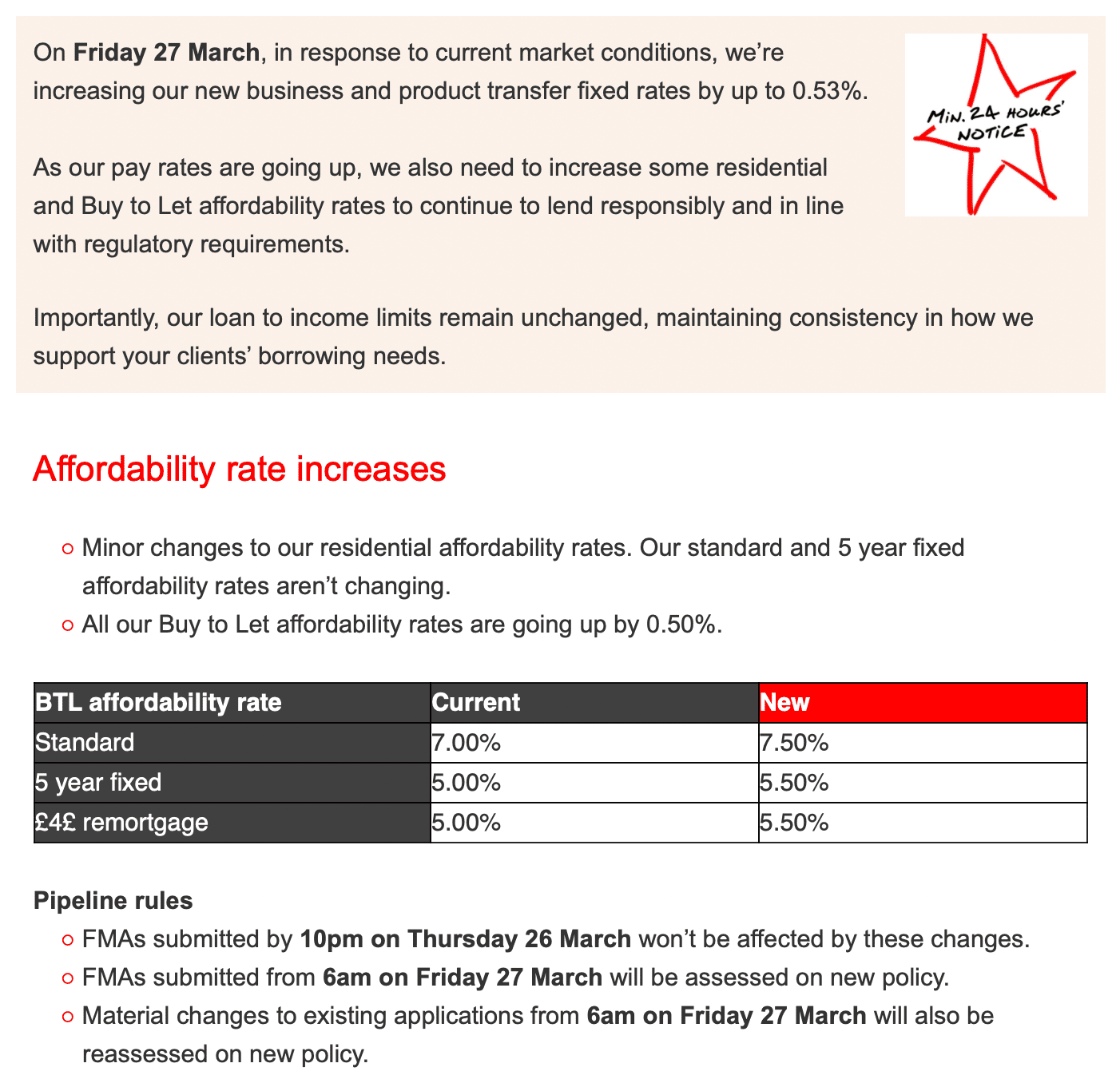
So not only higher rates, but borrowing less - will we see the market start to squeeze borrowers again? Comments please

4 responses from the Newspage community

Copy all

Star Quote
Copy

That just about wraps up the state of the mortgage market, as Santander is the last lender to react to the increased Swap rates and Middle East madness. Santander is the first to mention that their affordability will be reducing, at a time when the market is normally at its peak for home purchases around Easter. Higher rates and lower borrowing can accelerate the need for government intervention to keep the property market buoyant, or the UK will simply grind to a halt.
Copy

This is a hammer blow for the mortgage market. Santander are one of the UK's biggest lenders and they have hiked rates by an unimaginable level, only a month ago. Rates are now 10% higher after these increases and this could kill off a fragile market.
Copy

The scale of rate hikes there have been today is really quite something. Santander is having to tweak its lending rules as well as hike its rates by up to 0.53%, which is pretty tough on borrowers. We were expecting another wave of rate rises and we are certainly getting them. Hopefully, as funding costs come down and tensions in the Middle East ease borrowing costs will reduce.
Copy

This is the predictable bit of a mortgage scare. Rates tick up, affordability tightens, and the people who feel it first are buyers with the least slack.

But I keep coming back to one question: is Santander’s true cost of lending rising, or are they using a jumpy market to widen margins while everyone is nervy? If wholesale funding and swap rates have moved, fair enough. If not, a small rate move can be a quick way to slow demand, protect pipeline risk, and make a little more per loan.

Either way, the damage is the same in the short term. Chains get shakier, buyers get knocked out by the calculator, and deals die late.