Copy article

Retail sales up 1% in August but "the outlook for retail spending remains cautious"

ended 20. September 2024

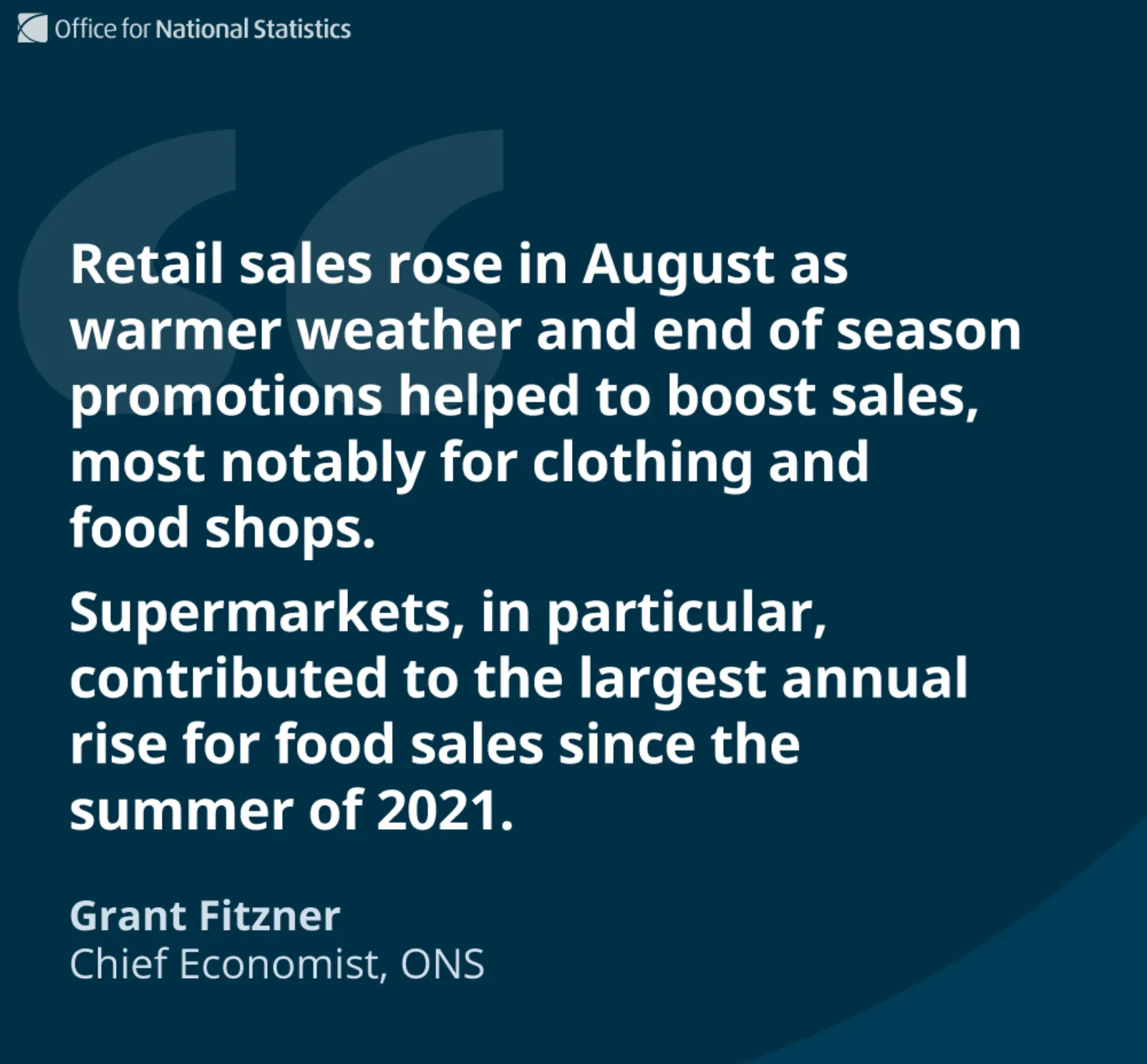
According to official data published this morning, retail sales volumes (quantity bought) are estimated to have risen by 1.0% in August 2024, following a rise of 0.7% in July 2024 (revised up from a 0.5% rise). Some supermarkets and clothing retailers reported a boost because of warmer weather and end-of-season sales. More broadly, sales volumes rose by 1.2% in the three months to August 2024, when compared with the three months to May 2024. Newspage asked retail experts, market analysts and economists for their views, below.
4 responses from the Newspage community

Copy all

Star Quote
Copy

As UK retail sales defy expectations with an August surge, it's unclear whether this is a retail renaissance or a false dawn. The unexpected rebound has offered a glimmer of hope for the beleaguered high street, however, as consumer confidence plummets to a six-month low, this resurgence could be short-lived. The impact of Starmer's ominous warning of a 'painful' budget ahead has been significant, with households growing increasingly anxious about potential tax hikes and spending cuts. The stronger-than-expected retail sales data presents a conundrum for the BoE, as while inflation has begun to stabilise in recent months, this increase in consumer spending could reignite inflationary pressures. The MPC may now need to reassess its stance, with the possibility of delays to further rate cuts until the inflationary outcome is more certain. While August's figures offer a ray of hope, the coming months will reveal whether this is a sustainable trend or merely a summer aberration.
Star Quote
Copy

The retail sector came to life in August. Though the economy is flatlining, there is money out there somewhere. I don’t usually credit the Bank of England but they have played it well by keeping rates on hold. The heightened services inflation, coupled with a huge beat on this retail sales data, makes sense in terms of staying at parity with the US Federal Reserve. This likely gives rise to a copycat cut cycle, where the BoE and Fed are in lockstep — great for risk. Any deviation from this lockstep, however, would create considerable opportunity in GBP/USD. For example, if the Bank of England were to cut 50 but the Fed 25 at the same month’s meeting, sterling would sell off hard — and vice versa of course.
Copy

The late summer was full of optimism, with borrowing becoming cheaper and the potential that a new government could bring, we saw increased positivity in conversations with would-be borrowers, so this uptick isn't a surprise. However, it's clear from conversations we are having now that people are worried about their finances again following the rhetoric from the Labour leadership about "pain to come" with many people delaying decisions until after the Halloween Budget hoping that it won't be the stuff of nightmares.
Copy

Retail sales have surged to their highest level since October 2022's mini-budget, signalling a potential sector rebound. With August's rate cut and real wage growth continuing to outpace inflation at over 2%, consumer spending is tentatively blossoming. This is evident as spending on discretionary items such as clothing and household goods are up, painting a rosier picture of personal finances. That said, storm clouds could loom on the horizon as GfK consumer confidence plummeted to -20 — the steepest drop since October 2023, fuelled by Budget whispers of tax hikes. This jittery sentiment could cast a shadow over the golden quarter (Q4). The retail sector's fate hangs in the balance, although a trifecta of continued wage growth, business rates reform, and a gentler Budget could spark a jolly Q4. However, if consumer wariness persists, retailers may face a bumpy sleigh ride. Only time will tell if this retail renaissance has staying power or if it's merely an end to a sizzling summer.