Copy article

One in six adults in the North West have no savings cushion — is the region facing a resilience crisis?

ended 23. September 2025

New data shows that adults in the North West are more likely to have low levels of savings, with 17% affected compared with a UK average of 14%. This makes the region one of the most financially vulnerable in the country, second only to the North East. With cost-of-living pressures still weighing heavily on households, this finding raises urgent questions about why families in the North West are struggling more than most to build financial buffers.
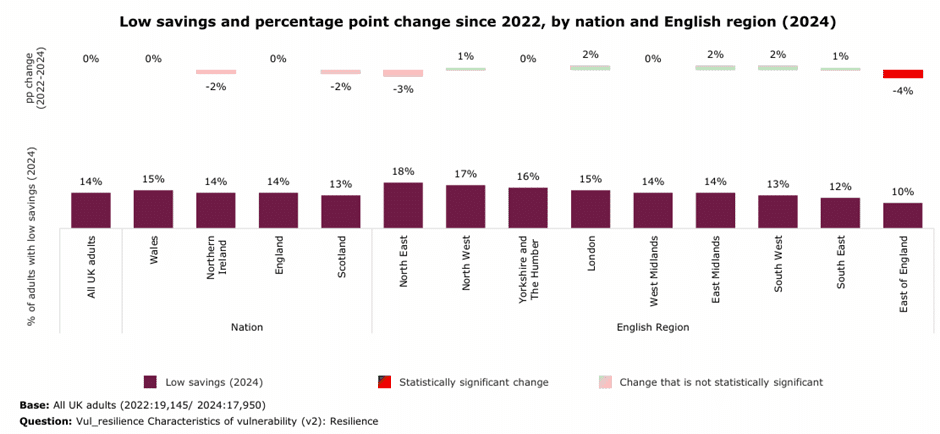
Source: FCA financial lives survey

We are seeking expert commentary from financial advisers and community finance specialists. Insights into both the structural drivers and the practical solutions are welcome.

  1. What economic and social factors might explain why adults in the North West are more likely to have low savings compared with the national average?
  2. How does the regional employment mix, cost of living, or housing market contribute to financial vulnerability in the North West?
  3. What could help households in the region build stronger financial resilience?

6 responses from the Newspage community

Copy all

Star Quote
Copy

The statistcs reflects a mix of long-standing economic and social factors. Since the 1980s, the UK has relied heavily on consumer credit and property wealth rather than building liquid cash buffers, but this pattern is amplified in regions that were hit hardest by deindustrialisation. Lower productivity and volatile jobs leave households with little surplus to save, while older or less healthy populations face higher inactivity and irregular earnings. On top of these structural pressures, behavioural dynamics play a role. Present bias and the “scarcity mindset” mean that when small surpluses appear, they are often spent or used to pay down debt rather than directed into rainy-day savings. Recent history has also made matters worse: households ran down what buffers they had during the 2022–23 cost-of-living shock, and while real wages have turned positive, persistently high interest rates and sticky living costs have left little room for rebuilding.
Copy

One in six adults in the North West have no savings, a resilience gap leaving households dangerously exposed. The FCA’s findings highlight a deepening crisis: one in six adults in the North West have no financial cushion, meaning even a boiler breakdown or missed wage can push them into costly debt. Despite cheaper housing than London, lower-paid and insecure jobs combined with rising rents, energy bills, and council tax erode disposable income. This isn’t just about “saving more” frozen tax thresholds and benefits failing to keep pace with inflation widen the North–South divide. Without structural change, households risk falling further behind, trapped between short-term shocks and long-term insecurity.
Copy

Savings levels in the North West are squeezed by lower wages, higher unemployment and more families renting rather than owning. Without the cushion of housing wealth, people are more exposed to rising food, energy and rent costs. Building resilience means government driving investment into the region to create better jobs and setting aggressive housebuilding targets to soften rental prices so families have more room to save.
Copy

This data shows a regional vulnerability, and if there was a large employer that was to leave or a substancial change in industry there would be catastrophic effects. The government need to ensure better regional investment to create better paying jobs, as well as a better mix of industry to develop resilience.
Copy

Lower skilled service jobs, zero hours contracts, and benefit dependency have created households across the NE that are perpetually one crisis away from financial disaster.

Meanwhile, housing costs consume disproportionate income shares even in cheaper areas, while frozen tax thresholds drag modest earners into punitive brackets designed for high flyers.

Until policymakers prioritise productive investment over redistributive gesture politics, the North West will remain economically colonised rather than genuinely level up with the South.
Copy

This isn’t about households failing to budget, it’s about households failing to flourish. In the North West, low pay, insecure work and rising costs leave families with no room to save. Those with weak credit cannot shop around, so they pay premium prices on bargain-basement budgets. The daily grind of living hand to mouth is as demoralising as it is degrading, with real mental health costs. Meaningless money-saving tips are no solution for people trapped in this cycle. What is needed is systemic change to consumer welfare and pricing so households can build genuine financial resilience.