
Copy article

Equity Release Complaints Data

Journalist: Justin Moy, Contributing Editor

ended 17. September 2024

Published by the Equity Release Council taoday, this shows the number of complaints (and the nature)
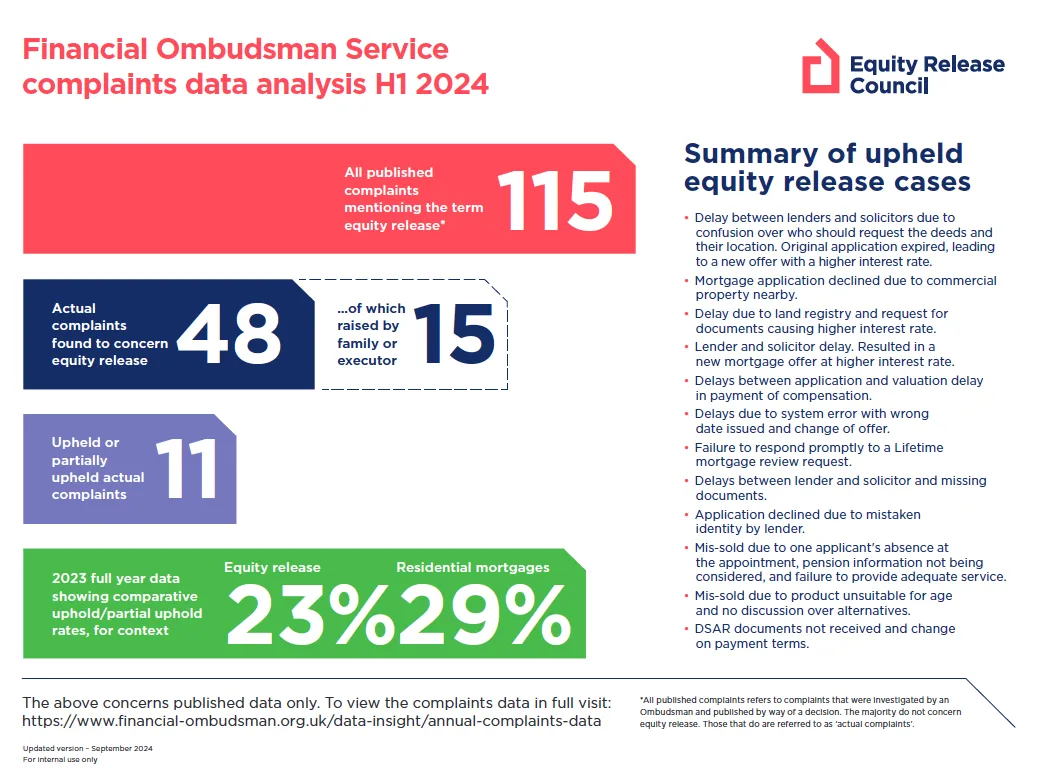
Is it adviser wrong-doing, or is it legal delays and complications causing consumer pain?

What issues and complaint have you seen on the horizon, how did you avoid them?

Would we have seen as many complaints, if the rates at the time had been reducing?

Your thoughts on the data, and the reasons for complaint to the ERC..

2 responses from the Newspage community

Copy all

Copy

Sadley the number of complaints has increased over the last few years with many being from older, legacy cases and it looks as though 2024 will again show a further increase.
Complaints specific to advisers or their advice are few and changes in company processes such as pre-advice case checking will help further combat the issue. It appears most complaints are due to delays, which most are avoidable. Legal delays will always be there until the conveyancing system in the UK is overhauled significantly to speed up the process and allow the sharing of information. Lenders have also improved processes, with some offering financial reward if cases are not offered quickly. All going to improve the journey (sorry). Advisers can help avoid issues with consumers by setting clear expectations at outset, and the removal of siloed advice will over the longer term reduce poor advice, meaning consumers are given the widest possible choice of options rather than just a single product.
Copy

The recent complaint data from the Equity Release Council highlights areas for improvement, but it's a reminder that customer care is paramount. While any complaint is disappointing, especially if avoidable, it underscores the importance of advisers doing thorough due diligence and anticipating potential issues. Interestingly, while rates have been high recently, this doesn’t seem to be the main trigger for dissatisfaction. Clear and proactive communication is crucial, particularly as clients expect all parties in the transaction—advisers, solicitors, and lenders—to work together seamlessly. Involving family is also vital, as data shows around a third of complaints originated from them. Blaming one party is rarely productive; the focus should be on collaboration and transparency to ensure smooth outcomes for clients.