
Politics

Copy article

Britain’s social and economic fragility: A double crisis

ended 18. August 2025

UK debt — enormous. Growth — pretty much non-existent. Taxes — already up. Business confidence — collapsing. More millionaires, job creators are leaving the UK than any other advanced nation. Surveys show that trend is going to pick up when the next data comes out. We have got one in four working-age adults on some form of welfare benefit. And now everybody is braced for this budget — Rachel Reeves’ big budget in the autumn.
How vulnerable is the UK to a sudden loss of market confidence — and could we realistically face an IMF-style bailout scenario as in 1976?

What does soaring debt interest mean for Labour’s spending plans?

Is economic weakness now fuelling political and social unrest?

5 responses from the Newspage community

Copy all

Star Quote
Copy

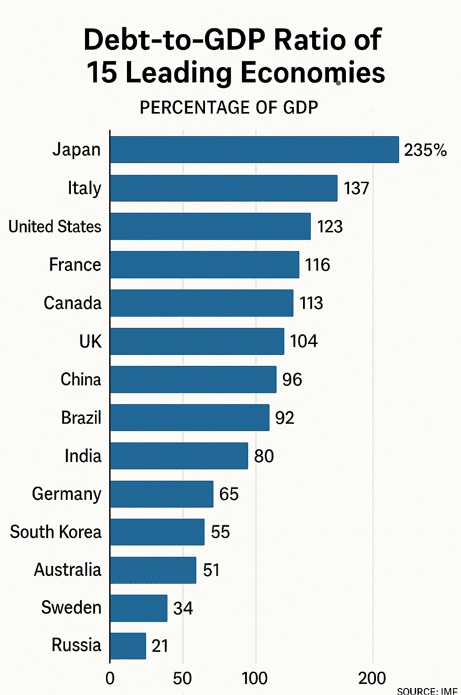
The parallels with 1976 are hard to ignore. Today, with debt nudging 104% of GDP on the official numbers and this does not include hidden liabilities like public sector pensions, PFI contracts, and the Bank of England’s off-balance-sheet schemes — the trajectory feels frighteningly familiar. Add to that, we are now borrowing just to pay the interest on past borrowing, and you begin to see why markets are losing patience. If confidence evaporates, an IMF rescue would no longer feel unthinkable. The sums are jaw-dropping. In June, the government borrowed £20.7 billion — and £16.1 billion of that went purely on debt interest. Every pound spent on interest is a pound that cannot be spent on hospitals, education, or infrastructure. The combination of weak growth, high borrowing, and a fracturing social fabric creates a dangerous feedback loop: economic fragility fuels political unrest, which in turn spooks markets, driving up borrowing costs further. That is how a debt doom loop takes hold.
Copy

It’s unfair to pin the debt mess solely on Rachel Reeves — the Conservatives failed to get it under control, and today’s numbers are just a continuation of that trend. Reeves is right that growth is the only real way out, but sadly to date there's little sign of any significant growth.

Without that much needed growth we risk being stuck in a cycle of high debt, high taxes and low confidence.

For households and investors, that translates into more financial pressure: frozen allowances, higher tax bills, weaker pensions and lower returns.

That economic strain is exactly why many people are questioning the traditional political choices — but as we’ve seen in America, populist leaders rarely have an economic magic wand.
Copy

In 2025, we live in a dis-United Kingdom. The numbers are too overwhelming to leave room for doubt. Debt at its highest levels since the 1960s, anaemic growth, taxes already at a post-WWII high and set to rise further, declining business confidence, a global high in the exodus of HNW individuals, 23% of the working age on benefits, and rising. The dis-United Kingdom is now on the front line of market vulnerability and IMF risk. In uncertain times, the trigger is as likely to come from a Truss 2022-like crisis from the bond markets as a further global shock. The economic weakness will add fuel to the social unrest that is almost inevitable. The immigration policies of all governments since Blair have divided communities, and two-tier Kier has just lost control completely.
Copy

As a nation, we are walking a tightrope. Successive governments have borrowed too much, lulled into a false sense of security when interest rates were low. There are two realistic ways out, one to cut spending drastically or to invest and grow our way out of it. Labour have chosen to invest but arguably they didn't really have an alternative as the UK's infrastructure has been crumbling for a generation. The only logical way forward is disclipine and sensible, strategic investments but the jury is out as to whether the government is capable of this.
Copy

The UK is hanging by a thread, and anyone pretending otherwise is delusional. We already saw the markets lose confidence during the Truss budget-that-wasn't-a-budget, and if that wasn't a warning, I don't know what is!

We’re spending more servicing debt than on our schools or our armed forces. That's right, every penny that could go into fixing Britain is being siphoned off to pay for the recklessness and incompetence of those who’ve run this country into the ground.

And yes, the economic rot is fuelling unrest. Strike action, families choosing between food and heating, and a total collapse of trust in politics. People are angry because the system is visibly broken, and all the Westminster bubble can do is finger point and churn out another empty slogan.